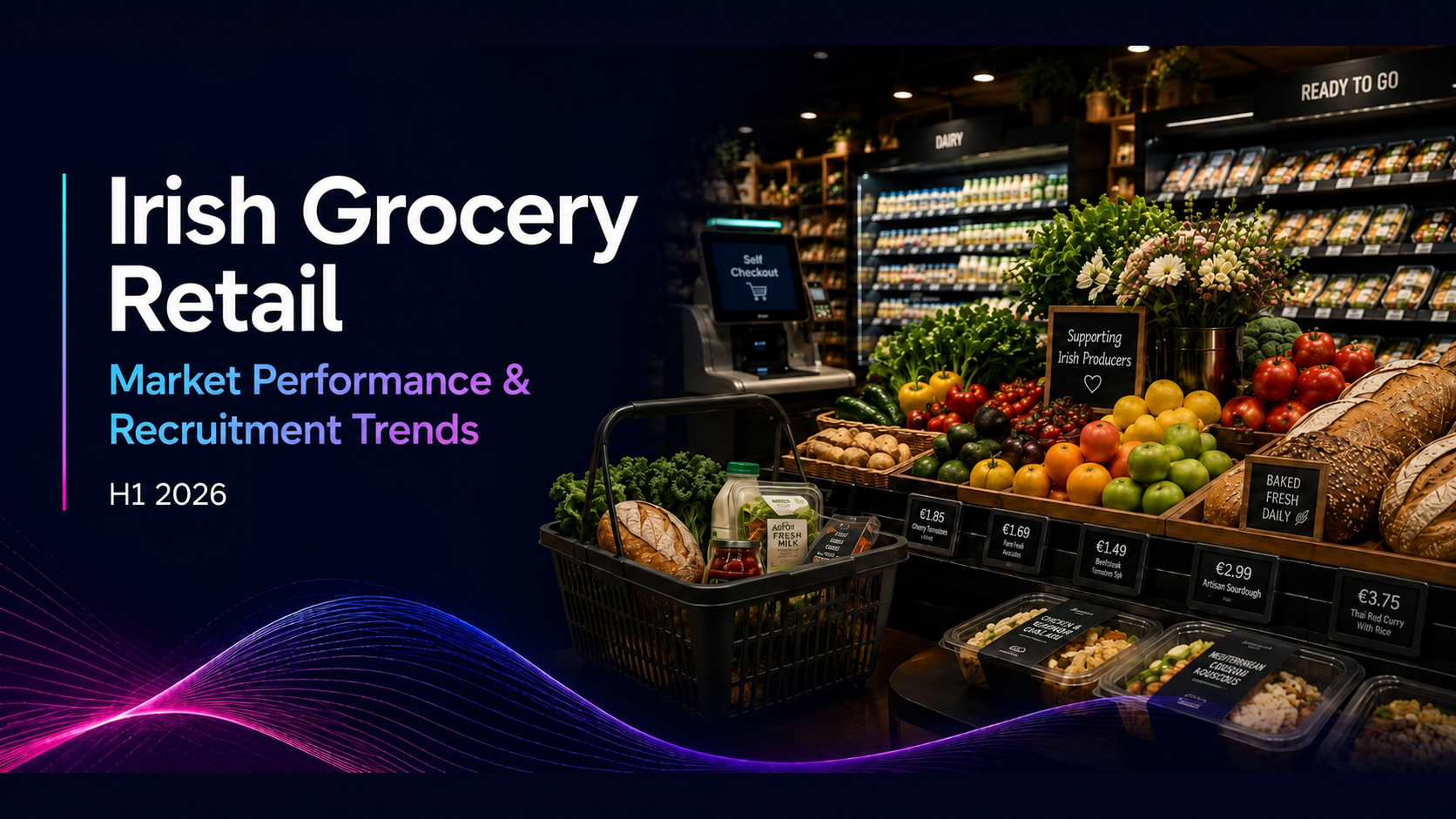
Our Director of Grocery Retail Recruitment, Nikki Murran, featured in the latest edition of ShelfLife Magazine to discuss what the first half of 2026 has told us about Irish grocery retail. Check out what she had to say below!
I’ve just finished reviewing all of our statistics, market data and recruitment figures from the first half of 2026, along with the feedback my team and I have gathered from retailers and candidates across the country. Each quarter we pull everything together to see what the numbers are telling us and, more importantly, whether they match what we’re hearing every day on the ground so I can share this information with our retailers.
There were a few trends that really stood out this time, so I thought I’d use this month’s article to share some of the biggest findings and what they mean for the grocery industry as we head into the second half of the year.
One thing is clear. Grocery retail continues to prove just how resilient it is.
Take-home grocery sales are still growing, online shopping continues to gather pace and inflation has eased to its lowest level since last summer. On paper, that’s encouraging. But dig a little deeper and you can see that shoppers are still being incredibly careful with their money. They’re making more shopping trips, buying a little less each time and looking harder for value.
That’s why retailers can’t afford to become complacent. Availability, promotions, own-label ranges and strong fresh food departments are making the difference. Customers are still spending, but they’re thinking much more carefully before they do.
Big battle
The battle at the top of the market remains fascinating. Dunnes and Tesco are virtually neck and neck, while Lidl continues to gain ground and online grocery has now become a €253 million part of the market. It’s another reminder that retailers are no longer managing just one shopping experience. They have to get both the physical store and online offering right, and neither can come at the expense of the other.
From a recruitment perspective, the market has been just as interesting. The biggest surprise for me has been the increase in senior hiring. We haven’t seen demand like this for experienced store managers, general managers and area managers in well over five years. Retailers aren’t just looking for people to keep the lights on. They’re investing in leaders who can improve commercial performance while building engaged, motivated teams.
Fresh food continues to be the biggest challenge, and that doesn’t look like it’s changing anytime soon. Every week we’re working on roles for deli managers, bakery managers, butchers and fresh food specialists, and the same issue keeps coming up. The best candidates aren’t actively applying for jobs. They’re already employed, they’re valued by their current employer and they’ll only move if the opportunity genuinely improves their career. That’s why businesses that move quickly almost always have the advantage.
What candidates want
One of the biggest changes I’ve noticed over the past couple of years is what candidates actually want.
Salary still matters, of course, and continued increases in the National Minimum Wage (NMW) have pushed expectations higher across almost every level of retail. But pay is no longer the whole conversation. Candidates want flexibility, supportive managers, career progression and a realistic work-life balance. They also want honesty. Telling someone they’re joining a ‘fast-paced environment’ isn’t exactly a unique selling point. Every grocery retailer in Ireland is fast-paced. Tell candidates what genuinely makes your business different instead.