careers

A Changing Conversation Around Careers

Nikki Murran asks is grocery retail becoming an attractive career again?

A few weeks ago, I was chatting with one of my aunts about my cousins. I have always been ridiculously impressed by them. Between them, they work in finance, technology and other highly specialised sectors. If you had asked me ten years ago which careers were the safest and most future proof, those industries would probably have topped the list.

What surprised me was hearing how much uncertainty there now is for graduates entering those sectors.

Our conversation quickly turned to AI and the impact it is already having on entry-level roles. While experienced professionals are adapting, there is growing discussion around what graduate programmes and junior positions in finance, accounting and technology will even look like over the next few years.

Driving home afterwards, I found myself thinking about grocery retail and how different the conversation feels in our industry.

I have always believed grocery retail is one of the best industries in Ireland to build a career in. It is why I have dedicated more than two decades of my life to the sector. What is nice to see now is that the facts are starting to back up what many of us working in the industry have known for years.

The numbers are starting to tell the story

Back in 2016, store managers in symbol supermarkets typically earned between €38,000 and €50,000. Today, store managers in small and medium supermarkets are commonly earning between €50,000 and €65,000, while experienced managers in larger supermarkets can earn up to €120,000 depending on the size and complexity of the operation.

Trainee managers have seen even more significant movement. In 2016, many trainee roles sat between €21,000 and €26,000. Today, those same positions are often attracting salaries of €35,000 to €36,000.

When you compare those increases against Irish inflation of approximately 20% over the same period, it becomes clear that many grocery retail management salaries have grown well ahead of the cost of living. Fresh food managers, store managers and trainee managers have all seen salary growth that comfortably surpassed inflation over the last decade.

The overall package has changed

The pay improvements are great to see, but what has always made this industry special goes beyond salary.

What has changed massively over the last decade is the overall package being offered to managers and retail teams.

Hours and work-life balance have improved in many businesses. Training is far more structured and accessible. There is a much bigger focus on soft skills, leadership and people management than there used to be, which is long overdue in an industry built around people.

Career paths are also far more transparent. In the past, progression could sometimes depend on who trained you or whether somebody happened to spot your potential. Now, many retailers have clear development plans in place and progression is much more closely linked to performance, attitude and hard work.

Bonuses and incentives have improved too, with many retailers rewarding managers directly for strong store performance, standards and team results.

There is also far more autonomy in modern retail management roles than people realise. Great managers are often given real ownership over their stores, their teams and the culture they want to create.

Perhaps the biggest shift of all, though, is culture.

Retailers are putting far more emphasis on creating positive working environments, supporting teams properly and developing leaders who can motivate and coach people well. There is still work to do, of course, but the difference compared to a decade ago is huge.

Grocery retail still needs people

There is also the security that comes with grocery retail.

While many sectors are questioning what AI might mean for their workforce, grocery retail remains rooted in people. Stores still need leaders. Teams still need coaching. Customers still need service. Products still need to be ordered, merchandised, prepared and sold.

Technology will absolutely change parts of retail, just as it will change every industry, but I struggle to see a future where great retailers do not need great people.

I also think people underestimate how enjoyable retail can be when you genuinely like working with people.

No two days are ever the same. You could walk into a store with a full plan for your day and within ten minutes something changes. A delivery arrives late, a team member calls in sick, a customer needs help or somebody accidentally burns half the breakfast pastries before 8am.

For the right personality, that unpredictability is actually part of the appeal. You are constantly interacting with people and constantly solving problems. You build genuine relationships with customers and teams over time, and that sense of community is something many industries simply cannot offer in the same way.

Ireland is leading the way

The continued growth of fresh food and convenience retail has also transformed the industry over the last decade. Irish retailers are now recognised among the best in Europe for fresh food standards, innovation and customer experience. From bakery and deli operations to food-to-go concepts and specialist departments, there are more career paths available in grocery retail today than ever before.

No industry is completely future-proof, and retail will continue to evolve like every other sector.

But for people looking for a career with progression, stability, strong earning potential and plenty of variety, grocery retail has a lot going for it.

Maybe more than ever before.

AI in recruitment

AI in Recruitment: Raising Standards, Not Replacing Recruiters

Shane McLave explains why AI can play a positive role in recruitment but why the role of the recruiter is as important as ever.

With the rapid advances in AI, do you think it will change the way we recruit in the hospitality industry?

Yes — AI is already changing recruitment and hospitality should move with it. Candidates are using tools like ChatGPT, Gemini and Copilot to refine CVs and applications; a growing share are now AI-edited. That is not inherently negative — proofreading and clearer writing help everyone. The risk is that profiles can read more senior or more technical than the person really is, and large volumes of applications can look “perfect” on paper. As a result, the brief and the assessment process matter more than ever.

That’s why strong hiring fundamentals matter — structured, competency-based interviews, practical scenarios and follow-ups that test real experience. Verification also cannot be an afterthought. AI makes it easier to create convincing references, qualifications — or even ID — so right-to-work checks, reference validation and qualification checks protect clients, teams and guests.

Has AI changed the way Excel Recruitment does business?

Yes and no. For over three years we have introduced AI and automation where it genuinely improves speed, accuracy and service. One example is timesheets. We have moved from paper timesheets for one-off shifts and spreadsheets for group bookings to fully online timesheets, improving security and providing a clearer audit trail. Over time, it can highlight patterns such as repeated overtime, peak pressure points or absence trends. As always, data quality matters — better inputs produce better insights.

Do you use AI when recruiting permanent position for clients? 

Yes. AI is particularly useful on permanent searches where the brief is specific — mandatory qualifications, technical skills, leadership behaviours or experience in certain standards and environments. We can interrogate our database of over 200,000 candidates using clear criteria and sensible exclusions to produce a relevant longlist quickly.

That speed means our consultants can spend more time speaking with people, validating fit and assessing capability in a structured way — shifting the focus from a polished CV to evidenced skills and outcomes.

Where do you see AI adding the most value in hospitality recruitment over the next 12-24 months?

The biggest gains will come from removing friction across the hiring journey. On the client side, AI can help turn a hiring need into a clearer brief — tightening salaries, standardising skill requirements and ensuring essentials like hours, location, pay structure and compliance steps are captured.

On the candidate side, it can improve communication — quick acknowledgements, interview scheduling and clearer timelines and next steps.

Beyond recruitment, AI can support onboarding and early success by sharing role-relevant policies, checklists and training refreshers and flagging where extra coaching may be needed.

Will AI replace recruiters? 

AI will not replace recruiters — but it will raise the standard of recruitment. It reduces manual administration, improves speed and consistency and frees time for what matters — relationships, understanding a client’s operation, representing their brand and guiding candidates through a professional, human process.

In hospitality, that human layer protects service quality because the right hire is not only about skills, but also standards, attitude and reliability under pressure.

Hospitality is a people business. The winning approach is using AI to enhance service — faster responses, better matching, stronger reporting — while keeping human judgement at the centre. Combine smart tools with structured interviewing, robust verification and clear guardrails around fairness and privacy and you can hire with more confidence and build teams that deliver outstanding experiences.

What Sets Great Retailers Apart?

What Sets Great Retailers Apart? Lessons from Ireland’s Top Grocery Leaders

Nikki Murran, Director of Grocery Retail Recruitment, reflects on how judging the recent Grocery Management Awards was a reminder of just how much talent exists across Irish grocery retail, and discusses the people, passion and customer focus that set leading retailers apart.

Listening to some of the country’s top retailers speak about their stores, teams and communities was genuinely inspiring. Across every category, from convenience and forecourt to supermarket and discount retail, one thing became very clear: the best store managers are rarely successful by accident. It also raised an interesting question. What is it that separates good retailers from exceptional ones? What common traits appear again and again among the very best operators in the country?

Future Leaders

While every retailer had their own personality and management style, several characteristics consistently stood out. For employers trying to identify future leaders, these are the qualities worth watching for. The first, and probably most important, is that great retailers are obsessed with people. They are obsessed in a real and authentic sense. The strongest store managers are invested in the people around them. They care about their teams, they want to see people develop and create environments where staff feel supported and valued. As a result, they get buy-in. Teams work harder for managers who care about them. The best retailers understand that strong cultures create stronger stores. They know happy, engaged teams tend to deliver better standards, better customer experiences and ultimately better commercial performance. That same focus extends beyond their own staff. Top retailers are deeply connected to their customers and communities. They listen, they notice trends and they understand what their customers want from their local store. They also build relationships naturally, whether that’s with suppliers, neighbouring businesses or regular shoppers who call in everyday. At its core, grocery retail is still very much a people business.

Belief

Another trait that consistently stood out was belief. The strongest store managers believe in their store, their team and their brand. They take pride in what their business represents locally, and they see their stores as more than simply a place to sell groceries. That confidence matters. You can feel it when you walk into well-run stores. Standards are high because expectations are high. Teams buy into the culture because management buy into it first.

Community Involvement 

Community involvement was another major common denominator. Nearly every top-performing retailer spoke passionately about their local area and the importance of giving something back. Whether it’s sponsoring local sports teams, supporting school raffles, organising charity events or simply helping local causes, the best retailers understand the value of community connection. They never take customer loyalty for granted. Regardless of whether it’s a convenience shop, a supermarket or a discount retailer, the strongest store managers position themselves as part of the local community. Customers know them, trust them and associate them with the store itself.

Passion

Passion was another recurring theme. The best retailers still genuinely love the industry. They are passionate about developing people, passionate about fresh food and passionate about delivering consistency and high standards every single day. You can hear it when they speak. Their enthusiasm lifts their teams and creates positive cultures within their stores. Retail can be demanding and fast-paced, but the strongest operators still speak about it with energy and pride.

Customer Service

And finally, there is customer service. While people and relationships are central to great retailing, the customer remains at the centre of every decision strong store managers make. For the best retailers, customer service is not a KPI or a department. It is the foundation of the business. Every decision, from staffing levels to store presentation, is made with the customer experience in mind. In a market where customers have more choice than ever, consistency and service are often what keep people coming back. And perhaps that is the real takeaway from meeting some of the country’s best retailers. Exceptional store managers are not just operationally strong. They lead with people, belief, passion, community and customer focus. The commercial results usually follow.

The Talent You Can’t Replace

Nikki Murran discusses why fresh food roles are the new gold dust.

Walk into any well-performing supermarket and you’ll see it straight away. The queue at the deli. The theatre at the butcher counter. The smell of fresh bread pulling customers across the shop floor.

Fresh food isn’t just part of the offer anymore. It is the offer. And yet, behind the scenes, there’s a growing problem that many retailers are only now starting to fully feel… the talent behind those counters is becoming harder and harder to find.

The candidates everyone wants… and few can find candidates for

Over the past 24 months, we’ve seen a clear shift in hiring demand. Butchers, bakers, deli managers, and in-store chefs are now some of the most requested roles across the grocery sector.

The challenge? The talent pool hasn’t grown with that demand. In fact, in many cases, it’s shrinking. Fewer young people are entering traditional trades like butchery and bakery.

Experienced professionals are being pulled between retailers, some are leaving the industry entirely for roles with more predictable hours.

The result is a very simple supply and demand issue. More jobs. Fewer qualified people. And increasing pressure on stores trying to maintain standards.

When one person makes all the difference

We often talk about “headcount” in retail, but fresh food roles don’t behave like standard hires.

A strong shop floor assistant is important. A great butcher or deli manager is transformational.

They:

→ Drive sales through product knowledge and upselling

→ Maintain standards that directly impact margin and waste

→ Build relationships with regular customers

→ Bring energy and personality to the store

Take that person out of the business, and the impact is immediate. Standards slip. Sales dip. The customer experience changes overnight.

The cost of getting it wrong

There’s a tendency to treat fresh food hiring like any other vacancy. Advertise, interview, fill the gap.

But the reality is, a poor hire in these roles costs far more than a temporary vacancy.

→ Waste increases due to poor prep and stock management

→ Sales drop when counters lose their appeal

→ Existing team members become stretched, leading to burnout

→ Customers notice… and they don’t always come back – most fresh food products are trust items – customers don’t forgive in these sections!!

In many cases, retailers would be better off waiting for the right person than rushing to fill the role quickly.

Pay is rising… but is it enough?

We’re seeing salaries for fresh food roles increase steadily, and in many cases, they’re now commanding a premium over other in-store positions.

But salary alone isn’t solving the problem. The candidates we speak to are also looking for:

Retailers who recognise this are gaining an edge. Those who don’t are finding themselves back at square one every few months.

So, what can retailers do?

There’s no quick fix, but there are a few practical steps that are making a real difference:

→ Invest in developing talent internally Some of the best hires we see come from within. Training up junior staff into specialist roles is no longer a “nice to have”. It’s becoming essential.

→ Protect your top performers If you have a strong butcher or deli manager, you need to know it and reward it or someone else on the market will.

→ Rethink the role itself Can hours be structured better? Can weekends be rotated more fairly? Small changes can make roles far more attractive.

→ Move quickly when you find the right person Good candidates don’t stay on the market for long. Delays in decision-making are costing retailers talent.

Final thought

Stores can invest in refits, layouts, and technology. All important. All visible.

But the real differentiator still stands behind the counter. You can refurbish a store in a matter of weeks. Replacing a great fresh food specialist? That can take months… and sometimes longer.

The retailers who understand that, and act on it, are the ones who will continue to stand out in an increasingly competitive market.

A Question of Money: I’m Moving From Employment to Self-Employment; What do I Need to Know

Our CEO, Barry Whelan, featured in the Sunday Business Post to answer a Question of Money. 

After more than 20 years working as an employee in the public service, I’ve decided to go out on my own and set up my own food business. What are the big financial changes/challenges I need to be prepared for when moving from employment to self-employment and how best can I manage these?

Inconsistent or Irregular Income

One of the biggest challenges you’re likely to face when moving from employment to self-employment is inconsistent or irregular income. As you’re working for yourself, it is up to you to generate your own income.

Your business will need to make a profit and in order for it to make a profit, you must be able to get customers. So, it’s important to think carefully about the kind of business you’d like to set up and to do your market research.

Find out who your customers will be, what they need, what they usually pay for your product or service, the size of the market, and what kind of competition you’re up against. Check in with your local enterprise board for advice on starting up your business, as well as information on any grants, financial or other supports that might be available. Be sure to choose a business that you have the time and skills to run.

Loss of Employment Benefits

Another big financial change you need to be prepared for when moving from employment to self-employment is the loss of employment benefits. For example, self-employed individuals generally don’t qualify for state sick pay (illness benefit) though they may be eligible for supports like the invalidity pension or disability allowance.

As a self-employed individual, you would also lose the annual entitlement to paid holidays which you had as an employee. So, you would need to budget for holidays when self-employed. Saving money into a holiday fund through the year is one way you could do this.

Loss of Pension Contributions

Another important benefit you could lose out on when you leave employment is a company pension. If you had a company pension as an employee, when you leave that employment, you will no longer be able to contribute to that pension or benefit from any employer contributions to the scheme.

The self-employed are not eligible for auto enrolment either. As a self-employed individual, you are very much on your own when it comes to pensions and you will need to make your own pension arrangements.

Tax Responsibilities

Another thing you will be responsible for as a self-employed individual is filing your own tax returns. This will be new to you as previously your employer would have deducted your income taxes, PRSI and universal social charge through payroll.

You will need to register with Revenue for self-assessment, file your tax returns and pay any tax due by the relevant tax deadline. You may also need to register for and pay Vat, depending on your turnover and the nature of the services you provide. You may find it helpful to hire an accountant or tax advisor to help with your tax returns, particularly at the outset.

Start-Up Costs

On setting up a business specifically, other costs to prepare for are start-up costs. You don’t always need a lot of cash behind you to start a business. Start-up costs for a small business could be into the hundreds or a few thousand euro, though can run to several thousand or more, depending on what exactly you establish.

To be able to start a business without much cash behind you, consider setting yourself up as a sole trader or self-employed individual who does not require a business premises.

If you can set up and run your own food business from home, that will be an immediate saving to you as you will save on rent. If you do need a business premises at some stage, explore low-cost rental options. You may be able to rent an office, hot desk or meeting room in your local enterprise centre or a local resource centre for a fraction of the cost of renting elsewhere.

Food Business Costs

You don’t mention exactly what your food business will do. If you intend to produce food, some of the main costs you’ll face include the cost of making the food and the cost of equipment. If you need equipment, see if you can buy second-hand equipment or if you can rent equipment out as this will help keep costs down.

If any friends, relatives or others would be in a position to lend you equipment, that would help too. Other costs you are likely to face include insurance, marketing and packaging. Insurance costs can be substantial, even for a small business, though there are a number of brokers who specialise in insurance for small businesses so it’s worth getting a recommendation here.

Packaging and Compliance

Good packaging will be key to attracting customers to buy your product. There are cost-effective packaging design services which could help save you money here so shop around. As you’re setting up a food business, it’s important to be aware of – and to meet – the rules around food hygiene and food safety, and this is another cost you need to prepare for.

Even if you run your food business from home, you must still meet the various requirements around food hygiene legislation and you must usually register your business with the HSE.

Conclusion

While there are many financial changes and challenges associated with becoming your own boss, once your business is established, you could find running your own business to be hugely rewarding. Getting advice from your local enterprise centre and/or an experienced, successful entrepreneur is key.

The Shift Towards Experience in Grocery Retail Hiring

For years, the typical hiring pattern in grocery retail was predictable. When a senior role came up, retailers often leaned towards the up-and-coming manager – the high-energy assistant manager ready for the next step up. Recently, I am seeing something different. Across independent and larger groups alike, there is a noticeable shift towards experienced and, in many cases, returning candidates. Retailers are leaning into maturity. They are choosing steady over speedy. Proven over promising.

One reason is simple. Fewer younger managers are putting themselves forward for full accountability roles. I speak daily to talented department managers who are excellent at running their areas but are hesitant to step into total store responsibility. The weight of staffing, compliance, margin, rosters, and constant problem-solving is not as attractive as it once was. Again, this is not about a lack of ability. It is about priorities. Many are carefully balancing career ambition with lifestyle, and full store accountability can feel all-consuming.

Creating risks

For independent retailers, in particular, this creates risk. Succession has traditionally been organic. A strong grocery manager becomes a store manager. A capable fresh food manager steps up when the time comes. But if the fewer mid-level managers want that jump, the natural pipeline narrows. Interestingly, while retailers are finding some resistance from the next generation, they are also rediscovering the value of those who have already done it. I am often successful in placing deli managers who are looking to return to work as their children get older. These are experienced professionals who stepped back for family reasons, not because they lacked skill or drive. Now, with more flexibility in their personal lives, they are ready to re-engage.

Wealth of experience

Retailers are actively seeking out these candidates who have this wealth of experience behind them, even if there is a break in between. They know they are getting someone who understands gross profit, waste control, food safety audits, and customer service standards without needing handholding. More importantly, they are getting someone who does not panic when a delivery is late or when the queue builds at lunchtime. They have seen busy Christmas weeks, supplier issues, staff shortages. Very little surprises them.

Another recent example is two butchers I worked with who took a break from the physical demands of lifting carcasses. One drove a bus. The other became a taxi driver. Both have now returned to the butcher counter, but in a slightly different capacity. They are using their experience and insight rather than relying purely on physical strength. Retailers value their product knowledge, their ability to train younger staff, and their understanding of margin and their stunning displays. Retailers are happy to delegate some of the more physical tasks on return for this level of experience behind the counters again!

Comfort in experience 

Their is a comfort in experience that many retailers are prioritising right now. More clients are telling me they would rather appoint a candidate who is a steady pair of hand, who has seen it all, who does not flap under pressure, and who is as reliable as the day is long. In an environment where margins are tight and operational pressure is constant; steadiness has real value. There is also a noticeable mindset difference. Many candidates from this generation believe strongly in ownership and personal responsibility. If something goes wrong in their department or store, they fix it. They do not immediately look outward for blame. They are not constantly scanning the market for the next title or the next move. For many, the priorities are fair pay, respect, and autonomy. Give them the space to run their store or area properly and they will.

This does not mean there is no place for ambitious younger managers. There absolutely is. But the balance is shifting. Retailers are thinking more carefully about risk. They are asking themselves who can protect margin, lead calmly, and stay the course. Increasingly, the answer is not always the fastest rising star. Sometimes, it is the professional who has already weathered the storm.

The shift towards experience may not be dramatic, but it is real. And for many retailers it’s a win-win option for them but also for the candidate and the store!

No Question About It

Five years ago, most retail interviews followed a fairly predictable script. The retailer asked the questions, the candidate answered them, and if the salary was reasonable and the location worked, the job usually got accepted. Fast forward to 2026 and interviews feel very different. Candidates arrive prepared. They ask thoughtful, sometimes uncomfortable questions, They want clarity, not reassurance. And they are far less willing to “take a punt” on a new role. As a recruiter working daily with grocery retailers across Ireland, I can say with confidence that many of the questions I now hear simply were not being asked a few years ago. Not necessarily because candidates have become awkward or demanding, but because their priorities have altered along with a shift in the employment market to a more candidate-led market since covid.

Here are the questions that keep coming up, and what they really tell us.

“What does a typical week actually look like?”

This is one of the most common questions now, and it is rarely about hours on paper. Candidates want to understand start times, finish times, weekend expectations, and how often the plan changes at short notice. What has shifted is that people value predictability almost as much as pay. Retailers with well-run rosters and honest answers tend to fill roles faster and keep people longer. Those who oversell flexible hours are usually seen as too good to be true – candidates are looking for some flexibility – on both sides. They expect a mix of shifts when seeking a retail role – but ultimately want to know they can still makes plans with family and friends and work a fair shift pattern.

“Who will I be reporting to – can you tell me more about them?”

This questions sometimes makes people pause, but it is being asked for a reason. Candidates are playing close attention to management stability. They want to know who they will learn from, who will support them, and whether that person has been in the role long enough to offer consistency. High turnover at management level is now seen as a warning sign, not just an operational issue. Candidates are quietly assessing whether this is a business that develops people or burns them out. Retailers who can talk confidently about their leadership team, progression stories, and internal promotions tend to stand out quickly. I often sell the manager alongside a role – there are plenty of amazing retailers who will mentor newcomers and help shape the trajectory of their career.

“How do you handle flexibility when life happens?”

This is not code for working less. It is about realism. Parents, carers, and experienced managers in particular ask this question. They want to know how the business responds when something unavoidable crops up. A sick child, an aging parent or an unavoidable family emergency. Rigid policies with no room for discretion are quietly costing retailers very good people. The most attractive employers are not the ones promising total flexibility, but the ones demonstrating common sense and trust. How you answer this question tells candidates a lot about your culture, whether you intend it to or not.

“What is the (real) reason this role is available?” 

This is a newer question, and an important one. Candidates want transparency. Is this a growth role? A replacement? A restructure? They are not expecting perfection, but they are trying to understand the culture better – and what the next step on from this role is. Straightforward explanations, even when the story is not ideal, tend to work better – even if it’s that someone didn’t work out – explaining what they were lacking or about how the role has changed presents a much more positive impression. People would rather join a business that is honest about its challenges that one that pretends they do not exist.

What this all means for retailers

It’s not necessarily that candidates have become difficult (well, maybe some have) – but they have become deliberate. They are thinking about longevity, stability, and quality of life, alongside salary and title. They are asking better questions because they have learned what matters to them. The retailers who are adapting to this shift are not necessarily offering more. They are offering clarity, structure, and respect. And that is proving to be a competitive advantage. Hiring in 2026 is no longer a quick transaction. It is a conversation. The businesses willing to engage properly in that conversation are the ones building stronger teams and keeping them.

Excel Recruitment on How Partnership and People are Driving Hospitality Forward

The hospitality sector is rebuilding with confidence as partnership and people drive sector momentum.

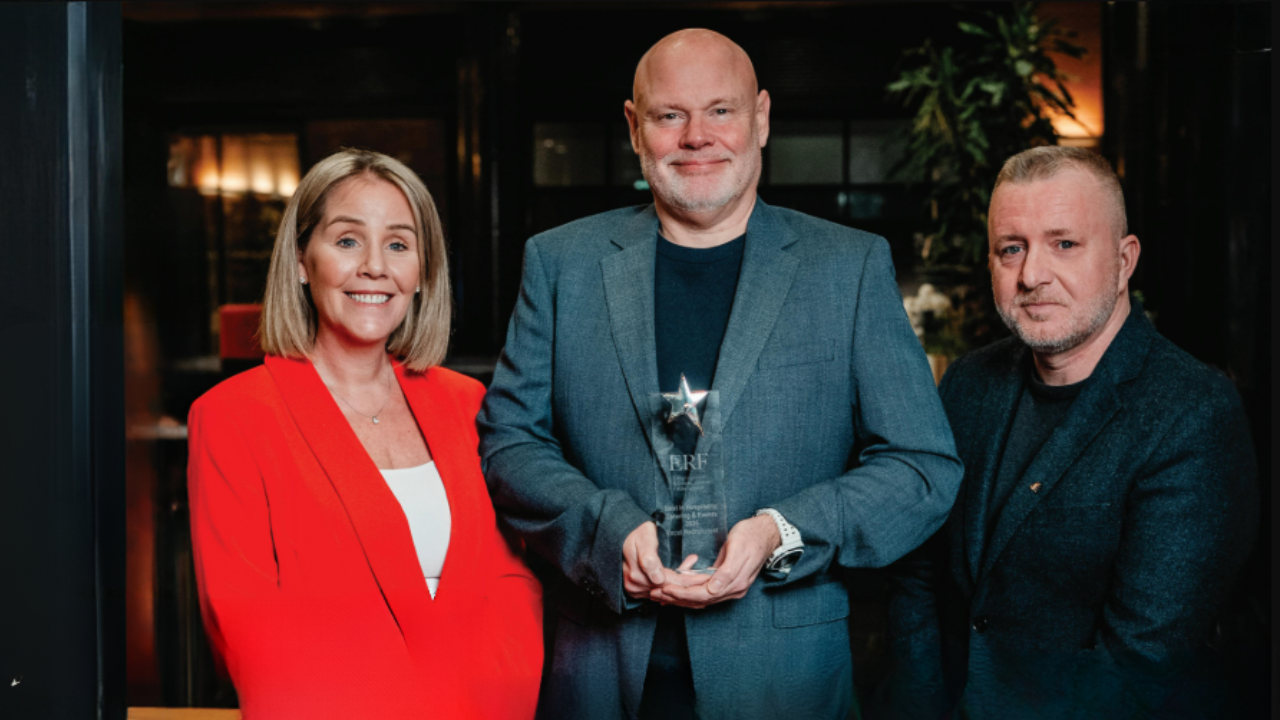
Excel Recruitment has once again been recognised at the Employment and Recruitment Federation (ERF) Awards, receiving Best in Practice: Catering, Events & Hospitality title for the second consecutive year. This recognition reflects a consistent approach to supporting the hospitality sector, built on long-standing partnerships with clients and the ongoing commitment of temporary staff, candidates and employees across the business. In a people-driven industry, the award serves as a reminder that sustainable success is shaped through collaboration as much as performance. That sense of shared progress is echoed across the wider hospitality sector as Ireland enters 2026 with renewed confidence and momentum.

A sector moving forward with measured optimism

After several challenging years marked by rising costs and operational uncertainty, the mood across hospitality, particularly in Dublin, has shifted noticeably. While pressures remain, including wage inflation, PRSI increases and the introduction of pension auto-enrolment, the prevailing outlook is increasingly focused on long-term stability rather than short-term survival. Rather than a single breakout year, the sector’s recovery is taking the shape of steady, sustainable progress. New hotels are opening, restaurant concepts are launching and investors continue to back Dublin as a destination for both domestic and international visitors.

New openings signal long-term confidence 

This renewed confidence is perhaps most evident in the calibre of recent and upcoming hospitality openings across the capital. Hotels such as the Hoxton Dublin, Moxy East Point and The Leinster have added momentum to the accommodation market, while several thousand additional rooms are currently under construction or planning. On the food and beverage side, the arrival of The Ivy Asia stands out as a particularly strong signal of confidence. As a globally recognised, experience-led dining brand, its decision to open in Dublin reflects belief in the city’s premium dining market and the continued appetite for high-quality hospitality experiences. Other launches, including Bar Pez and a growing number of wine-led and concept-driven venues, further reinforce the sense that operators are investing with intention rather than caution. Collectively, these developments point to a market that is recalibrating – prioritising quality, experience and long-term sustainability.

Positive momentum on the ground

Shane McLave, Managing Director of Excel Recruitment, notes a clear shift in sentiment across the sector. “You can genuinely feel hospitality coming back to life. Every month, we’re seeing new hotels open their doors, new restaurant concepts launching and fresh investment across the sector. After a difficult period, there’s now a real sense of momentum and ambition returning.” This activity is being supported by stronger booking patterns, recovering tourism numbers and the gradual return of conferences, events and corporate travel – all of which play a vital role in supporting year-round demand.

Managing costs while building for growth

Cost pressures remain a reality for hospitality employers. Minimum wage increases, higher PRSI contributions and the rollout of the pension auto-enrolment are expected to increase labour costs for minimum-wage roles by approximately 6% in 2026. However, many operators are responding strategically. Rather than limiting growth, businesses are investing in smarter workforce planning, operational efficiencies and technology. Digital check-ins, mobile ordering and automated inventory systems are helping to reduce administrative burdens while preserving the personal service that defines Irish hospitality.

An evolving workforce landscape

The hospitality workforce itself is also changing. Recent labour market research shows that more than 80% of hospitality employees now view the sector as a viable long-term career – a significant improvement compared to previous years. Employers are responding by placing greater emphasis on predictable scheduling, work-life balance, training and progression pathways. Accommodation supports and structured upskilling initiatives are becoming increasingly common, particularly among new and expanding operators. Temporary and flexible staffing models continue to play a crucial role, especially for newly opened hotels and venues managing phased launches, seasonal peaks and event-driven demand. This flexibility allows businesses to scale efficiently while maintaining service standards.

Supporting the sector’s next phase

As a specialist recruitment partner, Excel Recruitment, continues to work closely with hotels, restaurants and events venues nationwide as they navigate this next phase of growth. From building full teams for new openings to supplying temporary chefs, front-of-house staff and event personnel, the focus remains on providing flexible staffing solutions that respond to real operational needs. This approach has become increasingly important as businesses adapt to a more dynamic and cost-conscious operating environment. In 2024, Excel also launched the Irish Bar Academy, a hands-on training initiative designed to equip both new entrants and experienced staff with practical, job-ready bar skills. The programme reflects a broader belief that long-term sustainability in hospitality depends on continued investment in people and professional development.

Rebuilding with confidence

While challenges remain, the direction of travel for Irish hospitality is increasingly positive. Guests are returning, investment is continuing and operators are hiring again. High-profile openings, combined with a renewed focus on people, partnerships and operational efficiency, provide tangible evidence of confidence in the sector’s future. As McLave concludes: “The industry is under pressure from rising costs, but we’re also seeing genuine recovery. Businesses that invest in their people, improve working conditions and embrace operational efficiencies are well positioned for long-term success.” With renewed energy, evolving workforce models and strong collaboration across the industry, Irish hospitality is not just recovering – it is rebuilding with confidence.

Excel Recruitment Calls for Rethink on Taxation of Tips as CCPC Issues New Guidance

As Ireland’s hospitality and service sectors continue to grapple with staffing shortages, Excel Recruitment has called on Government to reconsider the taxation of tips as part of a broader effort to make lower-paid roles more attractive to workers.

The comments come as the Competition and Consumer Protection Commission (CCPC) prepares to publish new research and guidance on tipping practices in Ireland.

According to Shane McLave, Managing Director of Excel Recruitment, tips play a crucial role in supplementing incomes for workers in hospitality, beauty, and other customer-facing service roles.

“For lower-paid workers, tips are hugely valuable. While recent legislation rightly ensures that tips left by customers go directly to staff, the Government missed an opportunity to go one step further by considering whether tips — or a portion of them — should be excluded from the tax net.”

The Payment of Wages (Amendment) (Tips and Gratuities) Act 2022, which came into force in December 2022, introduced new rules to ensure transparency around tipping and made it illegal for tips or service charges to form part of an employee’s basic pay. However, all tips received by staff remain fully taxable.

Excel Recruitment believes that this approach does little to address the ongoing recruitment challenges faced by hospitality and other service sectors.

“These are often low-paid roles, yet they are essential to our local and national economy,” McLave said. “Allowing workers to earn a certain amount of tips tax-free could make a real difference in encouraging people back into the sector.”

He pointed to existing tax-free voucher schemes, which allow employers to provide employees with up to €1,500 per year in non-taxable benefits, noting that such initiatives rarely benefit tipped workers.

“A more progressive approach would be to introduce a similar threshold for tips in service industries, allowing workers to earn up to a certain amount without incurring a tax bill. This would directly support incomes in sectors such as hospitality and beauty.”

McLave also noted that, from a consumer perspective, tax has already been paid on the goods or services being purchased.

“Once a product or service has been paid for, the appropriate tax has already been applied. Tips are a discretionary reward for service, not part of the original transaction.”

For further insight into labour market trends across hospitality, retail and service industries — and how policy changes could support both employers and employees — contact Excel Recruitment on 01 871 7676 or email info@excelrecruitment.com