Excel Recruitment on How Partnership and People are Driving Hospitality Forward

The hospitality sector is rebuilding with confidence as partnership and people drive sector momentum.

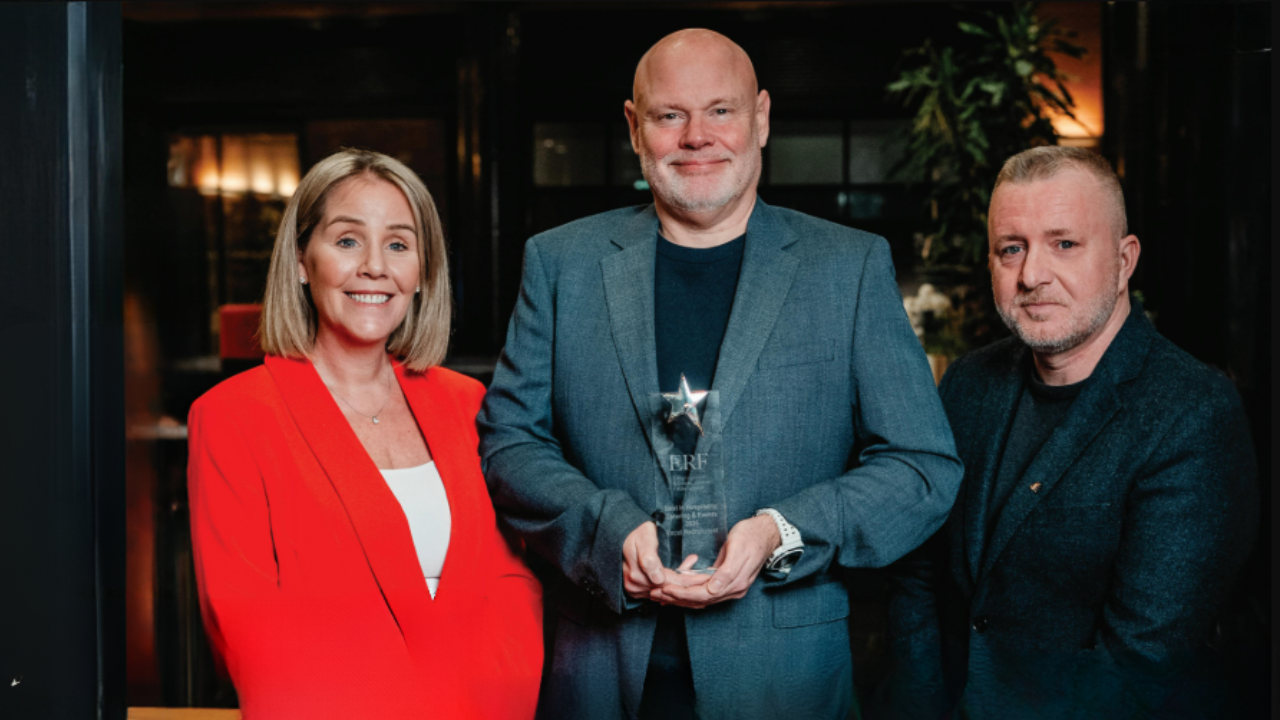
Excel Recruitment has once again been recognised at the Employment and Recruitment Federation (ERF) Awards, receiving Best in Practice: Catering, Events & Hospitality title for the second consecutive year. This recognition reflects a consistent approach to supporting the hospitality sector, built on long-standing partnerships with clients and the ongoing commitment of temporary staff, candidates and employees across the business. In a people-driven industry, the award serves as a reminder that sustainable success is shaped through collaboration as much as performance. That sense of shared progress is echoed across the wider hospitality sector as Ireland enters 2026 with renewed confidence and momentum.

A sector moving forward with measured optimism

After several challenging years marked by rising costs and operational uncertainty, the mood across hospitality, particularly in Dublin, has shifted noticeably. While pressures remain, including wage inflation, PRSI increases and the introduction of pension auto-enrolment, the prevailing outlook is increasingly focused on long-term stability rather than short-term survival. Rather than a single breakout year, the sector’s recovery is taking the shape of steady, sustainable progress. New hotels are opening, restaurant concepts are launching and investors continue to back Dublin as a destination for both domestic and international visitors.

New openings signal long-term confidence 

This renewed confidence is perhaps most evident in the calibre of recent and upcoming hospitality openings across the capital. Hotels such as the Hoxton Dublin, Moxy East Point and The Leinster have added momentum to the accommodation market, while several thousand additional rooms are currently under construction or planning. On the food and beverage side, the arrival of The Ivy Asia stands out as a particularly strong signal of confidence. As a globally recognised, experience-led dining brand, its decision to open in Dublin reflects belief in the city’s premium dining market and the continued appetite for high-quality hospitality experiences. Other launches, including Bar Pez and a growing number of wine-led and concept-driven venues, further reinforce the sense that operators are investing with intention rather than caution. Collectively, these developments point to a market that is recalibrating – prioritising quality, experience and long-term sustainability.

Positive momentum on the ground

Shane McLave, Managing Director of Excel Recruitment, notes a clear shift in sentiment across the sector. “You can genuinely feel hospitality coming back to life. Every month, we’re seeing new hotels open their doors, new restaurant concepts launching and fresh investment across the sector. After a difficult period, there’s now a real sense of momentum and ambition returning.” This activity is being supported by stronger booking patterns, recovering tourism numbers and the gradual return of conferences, events and corporate travel – all of which play a vital role in supporting year-round demand.

Managing costs while building for growth

Cost pressures remain a reality for hospitality employers. Minimum wage increases, higher PRSI contributions and the rollout of the pension auto-enrolment are expected to increase labour costs for minimum-wage roles by approximately 6% in 2026. However, many operators are responding strategically. Rather than limiting growth, businesses are investing in smarter workforce planning, operational efficiencies and technology. Digital check-ins, mobile ordering and automated inventory systems are helping to reduce administrative burdens while preserving the personal service that defines Irish hospitality.

An evolving workforce landscape

The hospitality workforce itself is also changing. Recent labour market research shows that more than 80% of hospitality employees now view the sector as a viable long-term career – a significant improvement compared to previous years. Employers are responding by placing greater emphasis on predictable scheduling, work-life balance, training and progression pathways. Accommodation supports and structured upskilling initiatives are becoming increasingly common, particularly among new and expanding operators. Temporary and flexible staffing models continue to play a crucial role, especially for newly opened hotels and venues managing phased launches, seasonal peaks and event-driven demand. This flexibility allows businesses to scale efficiently while maintaining service standards.

Supporting the sector’s next phase

As a specialist recruitment partner, Excel Recruitment, continues to work closely with hotels, restaurants and events venues nationwide as they navigate this next phase of growth. From building full teams for new openings to supplying temporary chefs, front-of-house staff and event personnel, the focus remains on providing flexible staffing solutions that respond to real operational needs. This approach has become increasingly important as businesses adapt to a more dynamic and cost-conscious operating environment. In 2024, Excel also launched the Irish Bar Academy, a hands-on training initiative designed to equip both new entrants and experienced staff with practical, job-ready bar skills. The programme reflects a broader belief that long-term sustainability in hospitality depends on continued investment in people and professional development.

Rebuilding with confidence

While challenges remain, the direction of travel for Irish hospitality is increasingly positive. Guests are returning, investment is continuing and operators are hiring again. High-profile openings, combined with a renewed focus on people, partnerships and operational efficiency, provide tangible evidence of confidence in the sector’s future. As McLave concludes: “The industry is under pressure from rising costs, but we’re also seeing genuine recovery. Businesses that invest in their people, improve working conditions and embrace operational efficiencies are well positioned for long-term success.” With renewed energy, evolving workforce models and strong collaboration across the industry, Irish hospitality is not just recovering – it is rebuilding with confidence.
hotel & catering

Hotel & Catering Outlook For 2022

Hotel & Catering Key Trends

For many industries, 2021 has been a year like no other… but for the Hotel & Catering industry, it’s been one of the hardest and strangest years of all time. The hospitality industry essentially closed for over a year and we’ve seen firsthand the huge impact it’s had on Hotels, Bars, Restaurants and Corporate Catering sectors.

When the time finally came to re-open (some doors are still closed and may never re-open) those that were lucky enough to still be in business faced a number of challenges with staffing being the most critical issue of all.

Let’s start with front of house:

A large proportion of people working as Bar staff, Waiters and in Accommodation come from countries outside of Ireland. Travel for the most part has been off the cards for many people for quite some time, and we simply don’t have the numbers of people available to fill the amount of jobs that we have.

What about hiring local staff?

Since March 2020, the industry has been virtually closed and we no longer have the interest from people who are finishing up in schools or colleges. This is mainly because the Hospitality Industry is now seen as a precarious one that could be closed again within a few weeks or months at best.

Looking for experienced staff?

A lot of people coming into the industry work part-time or during holidays while in college, but the industry has been closed more than it’s been open which has led to a massive shortage of people that have a year or two experience in the market.

What’s happening in the kitchen?

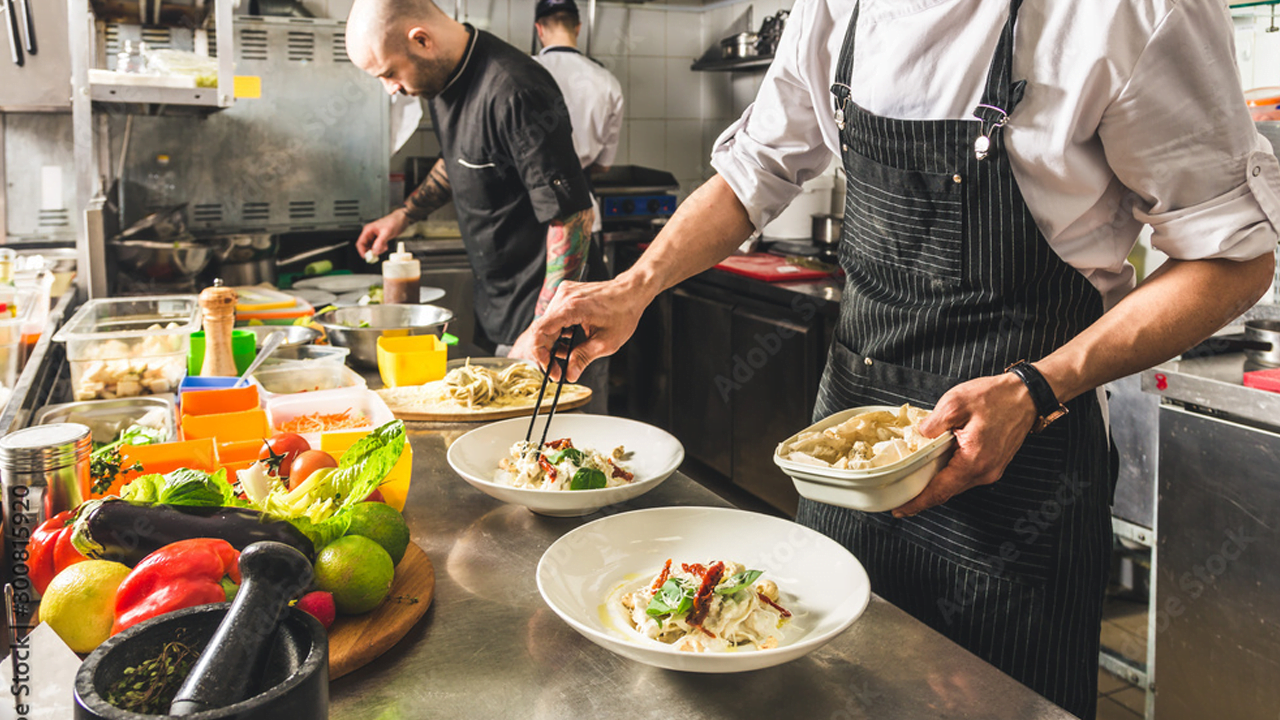
The Chef crisis is still in full swing, but the big issue of the moment is where are all the kitchen porters and the reply is simple… there are none!

As with front of house, we simply do not have the people coming into the country that we used to. The English Language Schools are back open, but we’re seeing people making the choice to study online. This is mainly because they can now do this from the comfort of a warmer and cheaper climate. Candidates are also realising that the salary and conditions are better in the manufacturing or distribution industry.

In addition to all of the above, many people who were only working part-time in the past and who earned circa €200 to €400 per week are now getting the PUP payment at €350 per week. So, with no questions being asked for staying at home and receiving (in some cases) higher wages, this brings another massive challenge to the Hospitality Industry.

Solutions – Can We Throw Money At It?

With many establishments not being able to operate at full capacity, it leads to a high proportion of events, weddings and conferences getting cancelled or being put off for the foreseeable future. Money is in short supply, so the emphasis is put on ‘what else can we offer’.

Working from home is not an option for most roles, so the industry can’t jump on this bandwagon. However, they can take a look at what else is important to the people they employ like flexible rosters, job sharing, or ongoing training and development.

The feeling that workers are being valued is the most important thing that we are hearing from candidates. But of course, supply and demand along with more increases to the minimum wage have also played their part and we are seeing a lot of movement in the traditionally lower paid positions. For example, Kitchen Porters and Accommodation staff along with Bar and Waiting staff have all seen increases. The new normal wage is close to €12 and €13 per hour for Kitchen Porters / Accommodation staff while Waiting and Bar staff positions are moving closer to €13 and €15 respectively.

Chefs have also taken a huge leap forward with €34,000 now being the standard salary paid by the 3 & 4 star Hotels for Chef de Partie and increases in the Commis rates all down the line.

The only place we are not seeing much movement in is the area of Head Chefs, but our Director Shane McLave believes that when the corporate catering sector fully re-opens without closures, there will likely be more competition in this area.

What’s Next?

Between the combination of an uncertain future and the over heated market that we are currently seeing, a lot of companies are moving towards the temporary and contingent workforce. This is particularly evident in traditional areas such as Waiting staff, Chefs and the emerging trends of Accommodation Staff / Management.

The industry is now seeing the benefits of having a recruitment partner that both understands their business and has the ability to flex up and down when required. This leaves businesses in a much better position as they will be more equipped to deal with staff shortages.

Get In Touch

If you’re looking for a recruitment partner or you wish to find a job in Hotel & Catering, please visit our Hotel & Catering section on our website by clicking here. Alternatively, you can email us at info@excelrecruitment.com.


seasonal staff

Important Skills for Seasonal Workers

Temporary work, especially coming up to the Christmas season, can be a really exciting and fun experience. Not only can working during this busy period earn you extra cash for your Christmas presents but there are loads of other benefits such as networking, learning new skills and filling gaps in your C.V But this type of seasonal work is undoubtedly busy and will require you to have certain skills and personality traits.

Flexibility

While seasonal work offers you a lot of flexibility and control over your schedule, you also have to offer your potential employer flexibility in return. There is no point applying for positions in busy restaurants if you only want to work Friday mornings. The ability to adapt to your employers needs will get you noticed, in a good way.

Ability to work under pressure

It goes without saying that Christmas is a busy time, especially for those in hospitality and catering. The ability to work under pressure and roll with the punches will make temporary seasonal work not only easier but also far more enjoyable.

Quick learner

Again, Christmas is a hugely busy time for most in the hospitality industry. While most employers will offer temporary staff full training, the ability to pick up the basics and adapt quickly to the company’s culture and way of doing things will mean you settle into the job much quicker and be able to give it your best.

Friendly manner

Just because Christmas is a busy time doesn’t mean normal rules go out the window. Being friendly, courteous and engaged is vital in any job but especially within the hospitality industry.

Your ability to remain customer focused during particularly hectic parts of the day will definitely be noted, and appreciated, by the employers.

Positive Thinking

Although the focus at this time of year is on Christmas cheer and being merry, everybody knows it can be a stressful time. The ability to deal with issues and/or complaints without letting them affect the rest of your shift, or even your whole day will mean you will be even more successful in your temporary role.