The hospitality sector is rebuilding with confidence as partnership and people drive sector momentum.
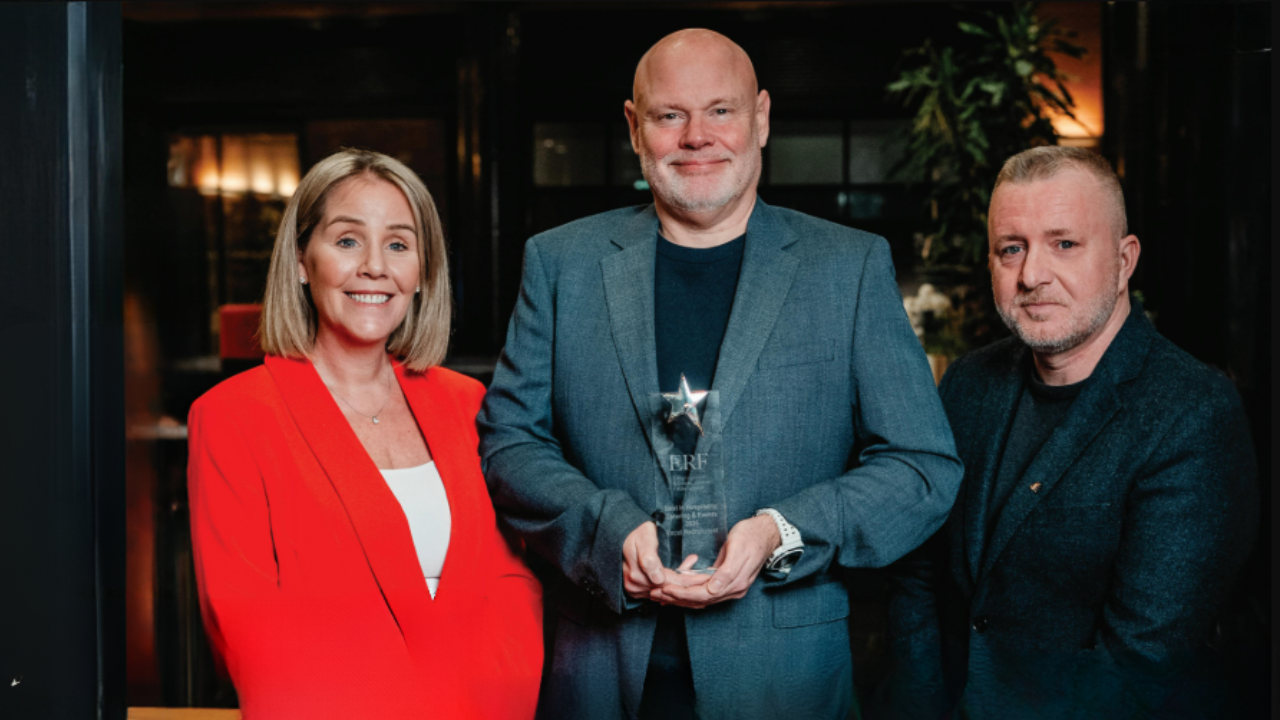
Excel Recruitment has once again been recognised at the Employment and Recruitment Federation (ERF) Awards, receiving Best in Practice: Catering, Events & Hospitality title for the second consecutive year. This recognition reflects a consistent approach to supporting the hospitality sector, built on long-standing partnerships with clients and the ongoing commitment of temporary staff, candidates and employees across the business. In a people-driven industry, the award serves as a reminder that sustainable success is shaped through collaboration as much as performance. That sense of shared progress is echoed across the wider hospitality sector as Ireland enters 2026 with renewed confidence and momentum.
A sector moving forward with measured optimism
After several challenging years marked by rising costs and operational uncertainty, the mood across hospitality, particularly in Dublin, has shifted noticeably. While pressures remain, including wage inflation, PRSI increases and the introduction of pension auto-enrolment, the prevailing outlook is increasingly focused on long-term stability rather than short-term survival. Rather than a single breakout year, the sector’s recovery is taking the shape of steady, sustainable progress. New hotels are opening, restaurant concepts are launching and investors continue to back Dublin as a destination for both domestic and international visitors.
New openings signal long-term confidence
This renewed confidence is perhaps most evident in the calibre of recent and upcoming hospitality openings across the capital. Hotels such as the Hoxton Dublin, Moxy East Point and The Leinster have added momentum to the accommodation market, while several thousand additional rooms are currently under construction or planning. On the food and beverage side, the arrival of The Ivy Asia stands out as a particularly strong signal of confidence. As a globally recognised, experience-led dining brand, its decision to open in Dublin reflects belief in the city’s premium dining market and the continued appetite for high-quality hospitality experiences. Other launches, including Bar Pez and a growing number of wine-led and concept-driven venues, further reinforce the sense that operators are investing with intention rather than caution. Collectively, these developments point to a market that is recalibrating – prioritising quality, experience and long-term sustainability.
Positive momentum on the ground
Shane McLave, Managing Director of Excel Recruitment, notes a clear shift in sentiment across the sector. “You can genuinely feel hospitality coming back to life. Every month, we’re seeing new hotels open their doors, new restaurant concepts launching and fresh investment across the sector. After a difficult period, there’s now a real sense of momentum and ambition returning.” This activity is being supported by stronger booking patterns, recovering tourism numbers and the gradual return of conferences, events and corporate travel – all of which play a vital role in supporting year-round demand.
Managing costs while building for growth
Cost pressures remain a reality for hospitality employers. Minimum wage increases, higher PRSI contributions and the rollout of the pension auto-enrolment are expected to increase labour costs for minimum-wage roles by approximately 6% in 2026. However, many operators are responding strategically. Rather than limiting growth, businesses are investing in smarter workforce planning, operational efficiencies and technology. Digital check-ins, mobile ordering and automated inventory systems are helping to reduce administrative burdens while preserving the personal service that defines Irish hospitality.
An evolving workforce landscape
The hospitality workforce itself is also changing. Recent labour market research shows that more than 80% of hospitality employees now view the sector as a viable long-term career – a significant improvement compared to previous years. Employers are responding by placing greater emphasis on predictable scheduling, work-life balance, training and progression pathways. Accommodation supports and structured upskilling initiatives are becoming increasingly common, particularly among new and expanding operators. Temporary and flexible staffing models continue to play a crucial role, especially for newly opened hotels and venues managing phased launches, seasonal peaks and event-driven demand. This flexibility allows businesses to scale efficiently while maintaining service standards.
Supporting the sector’s next phase
As a specialist recruitment partner, Excel Recruitment, continues to work closely with hotels, restaurants and events venues nationwide as they navigate this next phase of growth. From building full teams for new openings to supplying temporary chefs, front-of-house staff and event personnel, the focus remains on providing flexible staffing solutions that respond to real operational needs. This approach has become increasingly important as businesses adapt to a more dynamic and cost-conscious operating environment. In 2024, Excel also launched the Irish Bar Academy, a hands-on training initiative designed to equip both new entrants and experienced staff with practical, job-ready bar skills. The programme reflects a broader belief that long-term sustainability in hospitality depends on continued investment in people and professional development.
Rebuilding with confidence
While challenges remain, the direction of travel for Irish hospitality is increasingly positive. Guests are returning, investment is continuing and operators are hiring again. High-profile openings, combined with a renewed focus on people, partnerships and operational efficiency, provide tangible evidence of confidence in the sector’s future. As McLave concludes: “The industry is under pressure from rising costs, but we’re also seeing genuine recovery. Businesses that invest in their people, improve working conditions and embrace operational efficiencies are well positioned for long-term success.” With renewed energy, evolving workforce models and strong collaboration across the industry, Irish hospitality is not just recovering – it is rebuilding with confidence.