A Question of Money: I’m Moving From Employment to Self-Employment; What do I Need to Know

Our CEO, Barry Whelan, featured in the Sunday Business Post to answer a Question of Money. 

After more than 20 years working as an employee in the public service, I’ve decided to go out on my own and set up my own food business. What are the big financial changes/challenges I need to be prepared for when moving from employment to self-employment and how best can I manage these?

Inconsistent or Irregular Income

One of the biggest challenges you’re likely to face when moving from employment to self-employment is inconsistent or irregular income. As you’re working for yourself, it is up to you to generate your own income.

Your business will need to make a profit and in order for it to make a profit, you must be able to get customers. So, it’s important to think carefully about the kind of business you’d like to set up and to do your market research.

Find out who your customers will be, what they need, what they usually pay for your product or service, the size of the market, and what kind of competition you’re up against. Check in with your local enterprise board for advice on starting up your business, as well as information on any grants, financial or other supports that might be available. Be sure to choose a business that you have the time and skills to run.

Loss of Employment Benefits

Another big financial change you need to be prepared for when moving from employment to self-employment is the loss of employment benefits. For example, self-employed individuals generally don’t qualify for state sick pay (illness benefit) though they may be eligible for supports like the invalidity pension or disability allowance.

As a self-employed individual, you would also lose the annual entitlement to paid holidays which you had as an employee. So, you would need to budget for holidays when self-employed. Saving money into a holiday fund through the year is one way you could do this.

Loss of Pension Contributions

Another important benefit you could lose out on when you leave employment is a company pension. If you had a company pension as an employee, when you leave that employment, you will no longer be able to contribute to that pension or benefit from any employer contributions to the scheme.

The self-employed are not eligible for auto enrolment either. As a self-employed individual, you are very much on your own when it comes to pensions and you will need to make your own pension arrangements.

Tax Responsibilities

Another thing you will be responsible for as a self-employed individual is filing your own tax returns. This will be new to you as previously your employer would have deducted your income taxes, PRSI and universal social charge through payroll.

You will need to register with Revenue for self-assessment, file your tax returns and pay any tax due by the relevant tax deadline. You may also need to register for and pay Vat, depending on your turnover and the nature of the services you provide. You may find it helpful to hire an accountant or tax advisor to help with your tax returns, particularly at the outset.

Start-Up Costs

On setting up a business specifically, other costs to prepare for are start-up costs. You don’t always need a lot of cash behind you to start a business. Start-up costs for a small business could be into the hundreds or a few thousand euro, though can run to several thousand or more, depending on what exactly you establish.

To be able to start a business without much cash behind you, consider setting yourself up as a sole trader or self-employed individual who does not require a business premises.

If you can set up and run your own food business from home, that will be an immediate saving to you as you will save on rent. If you do need a business premises at some stage, explore low-cost rental options. You may be able to rent an office, hot desk or meeting room in your local enterprise centre or a local resource centre for a fraction of the cost of renting elsewhere.

Food Business Costs

You don’t mention exactly what your food business will do. If you intend to produce food, some of the main costs you’ll face include the cost of making the food and the cost of equipment. If you need equipment, see if you can buy second-hand equipment or if you can rent equipment out as this will help keep costs down.

If any friends, relatives or others would be in a position to lend you equipment, that would help too. Other costs you are likely to face include insurance, marketing and packaging. Insurance costs can be substantial, even for a small business, though there are a number of brokers who specialise in insurance for small businesses so it’s worth getting a recommendation here.

Packaging and Compliance

Good packaging will be key to attracting customers to buy your product. There are cost-effective packaging design services which could help save you money here so shop around. As you’re setting up a food business, it’s important to be aware of – and to meet – the rules around food hygiene and food safety, and this is another cost you need to prepare for.

Even if you run your food business from home, you must still meet the various requirements around food hygiene legislation and you must usually register your business with the HSE.

Conclusion

While there are many financial changes and challenges associated with becoming your own boss, once your business is established, you could find running your own business to be hugely rewarding. Getting advice from your local enterprise centre and/or an experienced, successful entrepreneur is key.

The Shift Towards Experience in Grocery Retail Hiring

For years, the typical hiring pattern in grocery retail was predictable. When a senior role came up, retailers often leaned towards the up-and-coming manager – the high-energy assistant manager ready for the next step up. Recently, I am seeing something different. Across independent and larger groups alike, there is a noticeable shift towards experienced and, in many cases, returning candidates. Retailers are leaning into maturity. They are choosing steady over speedy. Proven over promising.

One reason is simple. Fewer younger managers are putting themselves forward for full accountability roles. I speak daily to talented department managers who are excellent at running their areas but are hesitant to step into total store responsibility. The weight of staffing, compliance, margin, rosters, and constant problem-solving is not as attractive as it once was. Again, this is not about a lack of ability. It is about priorities. Many are carefully balancing career ambition with lifestyle, and full store accountability can feel all-consuming.

Creating risks

For independent retailers, in particular, this creates risk. Succession has traditionally been organic. A strong grocery manager becomes a store manager. A capable fresh food manager steps up when the time comes. But if the fewer mid-level managers want that jump, the natural pipeline narrows. Interestingly, while retailers are finding some resistance from the next generation, they are also rediscovering the value of those who have already done it. I am often successful in placing deli managers who are looking to return to work as their children get older. These are experienced professionals who stepped back for family reasons, not because they lacked skill or drive. Now, with more flexibility in their personal lives, they are ready to re-engage.

Wealth of experience

Retailers are actively seeking out these candidates who have this wealth of experience behind them, even if there is a break in between. They know they are getting someone who understands gross profit, waste control, food safety audits, and customer service standards without needing handholding. More importantly, they are getting someone who does not panic when a delivery is late or when the queue builds at lunchtime. They have seen busy Christmas weeks, supplier issues, staff shortages. Very little surprises them.

Another recent example is two butchers I worked with who took a break from the physical demands of lifting carcasses. One drove a bus. The other became a taxi driver. Both have now returned to the butcher counter, but in a slightly different capacity. They are using their experience and insight rather than relying purely on physical strength. Retailers value their product knowledge, their ability to train younger staff, and their understanding of margin and their stunning displays. Retailers are happy to delegate some of the more physical tasks on return for this level of experience behind the counters again!

Comfort in experience 

Their is a comfort in experience that many retailers are prioritising right now. More clients are telling me they would rather appoint a candidate who is a steady pair of hand, who has seen it all, who does not flap under pressure, and who is as reliable as the day is long. In an environment where margins are tight and operational pressure is constant; steadiness has real value. There is also a noticeable mindset difference. Many candidates from this generation believe strongly in ownership and personal responsibility. If something goes wrong in their department or store, they fix it. They do not immediately look outward for blame. They are not constantly scanning the market for the next title or the next move. For many, the priorities are fair pay, respect, and autonomy. Give them the space to run their store or area properly and they will.

This does not mean there is no place for ambitious younger managers. There absolutely is. But the balance is shifting. Retailers are thinking more carefully about risk. They are asking themselves who can protect margin, lead calmly, and stay the course. Increasingly, the answer is not always the fastest rising star. Sometimes, it is the professional who has already weathered the storm.

The shift towards experience may not be dramatic, but it is real. And for many retailers it’s a win-win option for them but also for the candidate and the store!

No Question About It

Five years ago, most retail interviews followed a fairly predictable script. The retailer asked the questions, the candidate answered them, and if the salary was reasonable and the location worked, the job usually got accepted. Fast forward to 2026 and interviews feel very different. Candidates arrive prepared. They ask thoughtful, sometimes uncomfortable questions, They want clarity, not reassurance. And they are far less willing to “take a punt” on a new role. As a recruiter working daily with grocery retailers across Ireland, I can say with confidence that many of the questions I now hear simply were not being asked a few years ago. Not necessarily because candidates have become awkward or demanding, but because their priorities have altered along with a shift in the employment market to a more candidate-led market since covid.

Here are the questions that keep coming up, and what they really tell us.

“What does a typical week actually look like?”

This is one of the most common questions now, and it is rarely about hours on paper. Candidates want to understand start times, finish times, weekend expectations, and how often the plan changes at short notice. What has shifted is that people value predictability almost as much as pay. Retailers with well-run rosters and honest answers tend to fill roles faster and keep people longer. Those who oversell flexible hours are usually seen as too good to be true – candidates are looking for some flexibility – on both sides. They expect a mix of shifts when seeking a retail role – but ultimately want to know they can still makes plans with family and friends and work a fair shift pattern.

“Who will I be reporting to – can you tell me more about them?”

This questions sometimes makes people pause, but it is being asked for a reason. Candidates are playing close attention to management stability. They want to know who they will learn from, who will support them, and whether that person has been in the role long enough to offer consistency. High turnover at management level is now seen as a warning sign, not just an operational issue. Candidates are quietly assessing whether this is a business that develops people or burns them out. Retailers who can talk confidently about their leadership team, progression stories, and internal promotions tend to stand out quickly. I often sell the manager alongside a role – there are plenty of amazing retailers who will mentor newcomers and help shape the trajectory of their career.

“How do you handle flexibility when life happens?”

This is not code for working less. It is about realism. Parents, carers, and experienced managers in particular ask this question. They want to know how the business responds when something unavoidable crops up. A sick child, an aging parent or an unavoidable family emergency. Rigid policies with no room for discretion are quietly costing retailers very good people. The most attractive employers are not the ones promising total flexibility, but the ones demonstrating common sense and trust. How you answer this question tells candidates a lot about your culture, whether you intend it to or not.

“What is the (real) reason this role is available?” 

This is a newer question, and an important one. Candidates want transparency. Is this a growth role? A replacement? A restructure? They are not expecting perfection, but they are trying to understand the culture better – and what the next step on from this role is. Straightforward explanations, even when the story is not ideal, tend to work better – even if it’s that someone didn’t work out – explaining what they were lacking or about how the role has changed presents a much more positive impression. People would rather join a business that is honest about its challenges that one that pretends they do not exist.

What this all means for retailers

It’s not necessarily that candidates have become difficult (well, maybe some have) – but they have become deliberate. They are thinking about longevity, stability, and quality of life, alongside salary and title. They are asking better questions because they have learned what matters to them. The retailers who are adapting to this shift are not necessarily offering more. They are offering clarity, structure, and respect. And that is proving to be a competitive advantage. Hiring in 2026 is no longer a quick transaction. It is a conversation. The businesses willing to engage properly in that conversation are the ones building stronger teams and keeping them.

Excel Recruitment on How Partnership and People are Driving Hospitality Forward

The hospitality sector is rebuilding with confidence as partnership and people drive sector momentum.

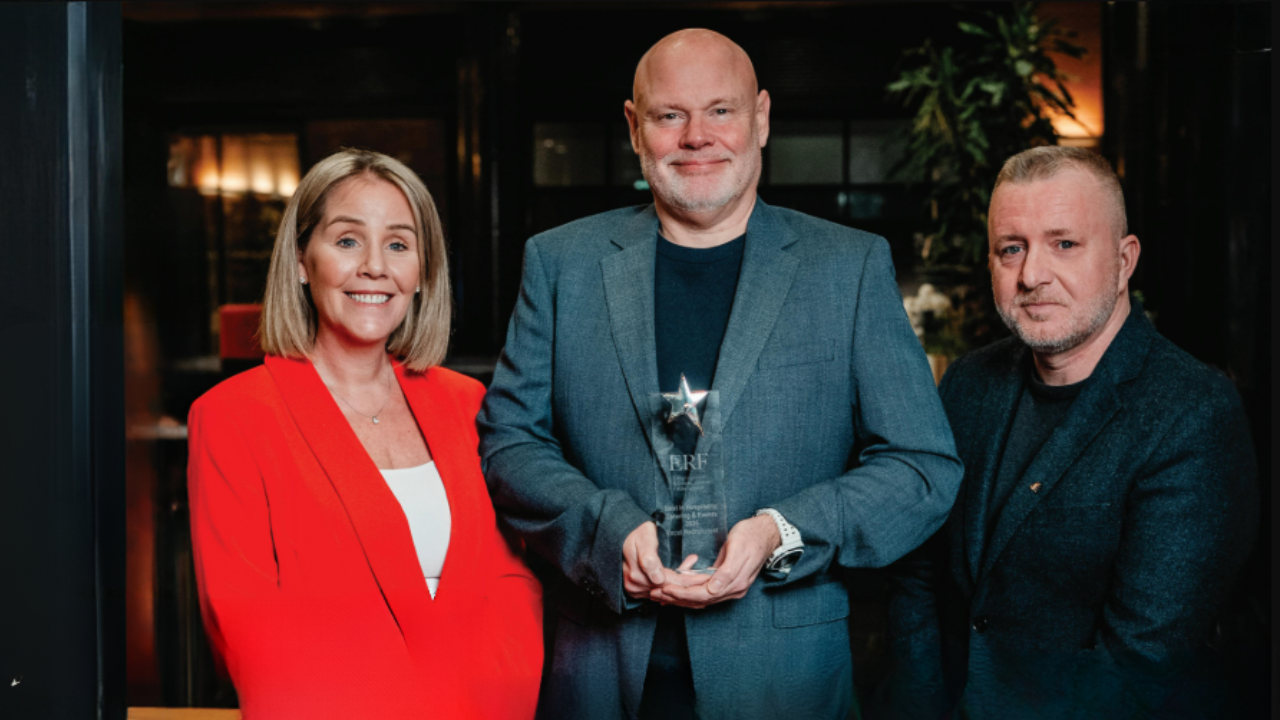
Excel Recruitment has once again been recognised at the Employment and Recruitment Federation (ERF) Awards, receiving Best in Practice: Catering, Events & Hospitality title for the second consecutive year. This recognition reflects a consistent approach to supporting the hospitality sector, built on long-standing partnerships with clients and the ongoing commitment of temporary staff, candidates and employees across the business. In a people-driven industry, the award serves as a reminder that sustainable success is shaped through collaboration as much as performance. That sense of shared progress is echoed across the wider hospitality sector as Ireland enters 2026 with renewed confidence and momentum.

A sector moving forward with measured optimism

After several challenging years marked by rising costs and operational uncertainty, the mood across hospitality, particularly in Dublin, has shifted noticeably. While pressures remain, including wage inflation, PRSI increases and the introduction of pension auto-enrolment, the prevailing outlook is increasingly focused on long-term stability rather than short-term survival. Rather than a single breakout year, the sector’s recovery is taking the shape of steady, sustainable progress. New hotels are opening, restaurant concepts are launching and investors continue to back Dublin as a destination for both domestic and international visitors.

New openings signal long-term confidence 

This renewed confidence is perhaps most evident in the calibre of recent and upcoming hospitality openings across the capital. Hotels such as the Hoxton Dublin, Moxy East Point and The Leinster have added momentum to the accommodation market, while several thousand additional rooms are currently under construction or planning. On the food and beverage side, the arrival of The Ivy Asia stands out as a particularly strong signal of confidence. As a globally recognised, experience-led dining brand, its decision to open in Dublin reflects belief in the city’s premium dining market and the continued appetite for high-quality hospitality experiences. Other launches, including Bar Pez and a growing number of wine-led and concept-driven venues, further reinforce the sense that operators are investing with intention rather than caution. Collectively, these developments point to a market that is recalibrating – prioritising quality, experience and long-term sustainability.

Positive momentum on the ground

Shane McLave, Managing Director of Excel Recruitment, notes a clear shift in sentiment across the sector. “You can genuinely feel hospitality coming back to life. Every month, we’re seeing new hotels open their doors, new restaurant concepts launching and fresh investment across the sector. After a difficult period, there’s now a real sense of momentum and ambition returning.” This activity is being supported by stronger booking patterns, recovering tourism numbers and the gradual return of conferences, events and corporate travel – all of which play a vital role in supporting year-round demand.

Managing costs while building for growth

Cost pressures remain a reality for hospitality employers. Minimum wage increases, higher PRSI contributions and the rollout of the pension auto-enrolment are expected to increase labour costs for minimum-wage roles by approximately 6% in 2026. However, many operators are responding strategically. Rather than limiting growth, businesses are investing in smarter workforce planning, operational efficiencies and technology. Digital check-ins, mobile ordering and automated inventory systems are helping to reduce administrative burdens while preserving the personal service that defines Irish hospitality.

An evolving workforce landscape

The hospitality workforce itself is also changing. Recent labour market research shows that more than 80% of hospitality employees now view the sector as a viable long-term career – a significant improvement compared to previous years. Employers are responding by placing greater emphasis on predictable scheduling, work-life balance, training and progression pathways. Accommodation supports and structured upskilling initiatives are becoming increasingly common, particularly among new and expanding operators. Temporary and flexible staffing models continue to play a crucial role, especially for newly opened hotels and venues managing phased launches, seasonal peaks and event-driven demand. This flexibility allows businesses to scale efficiently while maintaining service standards.

Supporting the sector’s next phase

As a specialist recruitment partner, Excel Recruitment, continues to work closely with hotels, restaurants and events venues nationwide as they navigate this next phase of growth. From building full teams for new openings to supplying temporary chefs, front-of-house staff and event personnel, the focus remains on providing flexible staffing solutions that respond to real operational needs. This approach has become increasingly important as businesses adapt to a more dynamic and cost-conscious operating environment. In 2024, Excel also launched the Irish Bar Academy, a hands-on training initiative designed to equip both new entrants and experienced staff with practical, job-ready bar skills. The programme reflects a broader belief that long-term sustainability in hospitality depends on continued investment in people and professional development.

Rebuilding with confidence

While challenges remain, the direction of travel for Irish hospitality is increasingly positive. Guests are returning, investment is continuing and operators are hiring again. High-profile openings, combined with a renewed focus on people, partnerships and operational efficiency, provide tangible evidence of confidence in the sector’s future. As McLave concludes: “The industry is under pressure from rising costs, but we’re also seeing genuine recovery. Businesses that invest in their people, improve working conditions and embrace operational efficiencies are well positioned for long-term success.” With renewed energy, evolving workforce models and strong collaboration across the industry, Irish hospitality is not just recovering – it is rebuilding with confidence.

Excel Recruitment Calls for Rethink on Taxation of Tips as CCPC Issues New Guidance

As Ireland’s hospitality and service sectors continue to grapple with staffing shortages, Excel Recruitment has called on Government to reconsider the taxation of tips as part of a broader effort to make lower-paid roles more attractive to workers.

The comments come as the Competition and Consumer Protection Commission (CCPC) prepares to publish new research and guidance on tipping practices in Ireland.

According to Shane McLave, Managing Director of Excel Recruitment, tips play a crucial role in supplementing incomes for workers in hospitality, beauty, and other customer-facing service roles.

“For lower-paid workers, tips are hugely valuable. While recent legislation rightly ensures that tips left by customers go directly to staff, the Government missed an opportunity to go one step further by considering whether tips — or a portion of them — should be excluded from the tax net.”

The Payment of Wages (Amendment) (Tips and Gratuities) Act 2022, which came into force in December 2022, introduced new rules to ensure transparency around tipping and made it illegal for tips or service charges to form part of an employee’s basic pay. However, all tips received by staff remain fully taxable.

Excel Recruitment believes that this approach does little to address the ongoing recruitment challenges faced by hospitality and other service sectors.

“These are often low-paid roles, yet they are essential to our local and national economy,” McLave said. “Allowing workers to earn a certain amount of tips tax-free could make a real difference in encouraging people back into the sector.”

He pointed to existing tax-free voucher schemes, which allow employers to provide employees with up to €1,500 per year in non-taxable benefits, noting that such initiatives rarely benefit tipped workers.

“A more progressive approach would be to introduce a similar threshold for tips in service industries, allowing workers to earn up to a certain amount without incurring a tax bill. This would directly support incomes in sectors such as hospitality and beauty.”

McLave also noted that, from a consumer perspective, tax has already been paid on the goods or services being purchased.

“Once a product or service has been paid for, the appropriate tax has already been applied. Tips are a discretionary reward for service, not part of the original transaction.”

For further insight into labour market trends across hospitality, retail and service industries — and how policy changes could support both employers and employees — contact Excel Recruitment on 01 871 7676 or email info@excelrecruitment.com

Retail recruitment outlook 2026

Navigating Retail Recruitment in 2026

Our Director of Fashion & Non-Food Retail Recruitment, Aislinn Lea, featured in the Retail Times sharing her expert insights on retail recruitment in 2026:

I’ve had a front-row seat to one of the most fast-moving and challenging periods the Irish retail sector has seen in years. Looking back on 2025 and ahead into 2026, one thing is clear: Irish retail recruitment is vibrant, but it’s also more complex than ever. From our 2026 Non-Food & Fashion Retail Salary Guide, we saw more than three times more retail roles registered in the final quarter of 2025 than in the same period in 2024. That shows real confidence in the sector, but also the difficulties retailers are facing in finding and keeping the right people.

A more selective candidate market

Candidates are no longer moving for “another job”. They are more selective in what they want from a career. Location, flexibility, and quality of life are ahead of traditional progression or job titles. We’ve also seen a shift in salary expectations. The most in-demand salary band for retail management roles, previously between €35,000 and €42,000, has now moved to €40,000–€52,000. It is becoming difficult for employers to attract managers with three to four years’ experience for under €40,000. That puts pressure on payroll budgets, particularly for independent and SME retailers.

The impact of the minimum wage increase

The increase in the national minimum wage to €14.15 per hour is a positive development for workers, but it’s not without consequences for employers. Larger retail chains offering higher entry-level rates are attracting a sizeable share of the junior talent pool: people who might have started and grown their careers in smaller businesses. SMEs are finding it harder to compete, not just on pay, but the full package needed to attract and retain staff.

Why employer brand and benefits now matter more

Salary alone is no longer enough. Candidates are making decisions based on the overall employment proposition:

→ The strength and reputation of the brand

→ Day-to-day working conditions

→ Work–life balance and flexibility

Retailers who are winning the war for talent are offering:

→ 37.5 – 39 hour contracts

→ 23–25 days’ annual leave

→ Contributory pension schemes

→ Predictable scheduling and regular weekends off

Even small, thoughtful benefits make a big difference and are often the details candidates remember when comparing offers.

The challenge of city-centre vacancies

There is a growing reluctance among candidates to commute long distances or into city-centre locations. Commuting time, public transport costs, and parking fees are deterrents. Employers who offset these – through flexible scheduling, hybrid arrangements for head office positions, travel supports, or parking contributions – are better placed to secure talent.

Leadership is the real differentiator

Across both retail and head office support functions, one theme stands out: leadership. Our clients are no longer looking for managers who are simply strong operators; they want people who can lead, coach, and develop teams. Succession planning and internal growth have become essential to long term retention. Retailers who will thrive in 2026 and beyond:

→ Invest in developing their managers as leaders

→ Create clear internal career paths

→ Recognise and reward people who grow with the business

Looking ahead to 2026

My message to retailers is straightforward: those who invest in people, brand, and flexibility will continue to attract the next generation of leaders in one of Ireland’s most vibrant, yet competitive, employment markets.

Borrowed Beliefs

Walk into any store and you can usually feel it in the first 30 seconds. One team moves like they own the place: sharp standards, quick decisions, a tidy back store, customers actually helped rather than herded. Another team looks like they’re permanently waiting for bad news. Same brand. Same systems. Same footfall. Completely different atmosphere.

A big part of that difference comes down to beliefs, especially the “borrowed” kind. Borrowed beliefs are beliefs we adopt without really questioning the assumptions behind them. They can narrow what we think is possible and quietly shape our behaviour. In retail, those beliefs often do not just live in someone’s head. They spread through teams, mainly via the person with the keys and the rota.

Managers create self-fulfilling prophecies, whether they mean to or not

There’s a concept in psychology known as the Pygmalion effect: when leaders hold higher expectations, performance tends to rise. The opposite is the Golem effect: low expectations can drag performance down. Both sit under the umbrella of a self-fulfilling prophecy.

In retail terms, it looks like this.

A manager believes, “My team are capable, and if I’m clear and fair, they’ll step up.” So, they coach more, delegate more, give better feedback, and notice progress. The team grows into that expectation.

Another manager believes, “They’re useless, they don’t care, they’ll never get it right. So, they micromanage, only speak up when something is wrong, and stop investing in development. The team shrinks into that expectation, because why would you stretch yourself for someone who has already decided you won’t?

This is where borrowed beliefs get dangerous. A new supervisor who has only ever worked under negative management can easily borrow the belief that retail staff just need watching”. A new store manager can borrow the belief that “fresh food teams are always drama”. Beliefs like these become the lens through which every interaction is interpreted.

Retail is a belief business as much as a numbers business

Yes, availability matters. Yes, shrink matters. Yes, payroll matters. But store culture is built one shift at a time by what a manager consistently signals is true:

→ Who gets trusted

→ Who gets coached

→ Who gets listened to

→ Who gets written off

That is why a great manager can take a messy store and turn it around in a quarter, and why a poor manager can burn through a brilliant team in the same timeframe.

From a recruiter’s seat: how to hire managers who instil positive beliefs

When I’m hiring store and department managers, I’m not just listening for competence. I’m listening for the beliefs sitting underneath the competence, because that belief system will show up on a wet Tuesday when the delivery is late and half the team are missing.

Here are the green flags that usually show up in high-performing, people-positive leaders:

→ They talk in “we”, not “I”

Not in a cheesy way. In a responsibility way. They understand that results come through people.

→ They can explain development step by step

If they cannot describe how they took an average performer to a strong one, they probably rely on “hiring good people” rather than building them.

→ They use standards, not shame

They hold the line without humiliation. They correct behaviour while protecting dignity.

→ They’re calm under pressure

Retail will test your nervous system daily. The best managers do not outsource their stress to the team.

→They’re consistent

Teams can handle tough decisions. What they cannot handle is unpredictability, favourites, or moving goalposts.

And here are the red flags that often signal a manager who installs limiting beliefs:

→ “People just don’t want to work anymore.”

→ “I don’t have time for handholding?”

→ “You can’t trust anyone.”

→ “If you want it done right, do it yourself”

Sometimes those lines come from genuine frustration, but they can also reveal a belief system that tends to produce exactly the outcomes they complain about.

Interview questions that expose beliefs quickly

If you want to spot belief-led leadership in an interview; try these:

→ “Tell me about a team member who was struggling. What did you do in week one, week two, week three?”

→ “What does good’ look like on a closing shift, and how do you train it?”

→ “When standards slip, what’s your first move: process, people, or performance management?”

→ “How do you balance pace with positive culture on busy days?”

→ “What would your last team say you believed about them?”

Great managers answer with specifics, structure, and ownership.
Poor ones answer with blame, vagueness, or a heroic story about how they carried the store.

The soft skills that turn beliefs into performance

If I had to pick the soft skills that matter most for belief-building leaders in retail, it would be these:

→ Coaching ability: can they teach, not just tell?

→ Emotional control: can they stay steady when it gets messy?

→ Clarity: expectations and priorities are unambiguous.

→ Fairness: same rules, same follow-through, no favourites.

→ Curiosity: they ask, “what’s in the way?” before deciding ” they don’t care.”

→ Recognition: they notice progress, not just problems.

→ Accountability with respect: they deal with issues directly. without theatre.

→ Psychological safety: people feel safe to speak up, flag risks, and learn.

That last one matters more than most people realise. In retail, psychological safety looks like a team member feeling able to say, “Tim not confident on cash”, or “That delivery is wrong”, or “The planogram doesn’t match the shelf”, without being made feel stupid. It prevents small issues turning into expensive ones, and it makes people far more likely to stay.

The bottom line

Managers do not just manage tasks. They manage belief.

A belief-led manager walks into a store and quietly installs a new story: “We do standards here.” We can handle pressure.” We learn fast. “We back each other”. Given enough consistency, the team starts borrowing that belief, and results follow.

So, if you are hiring your next store manager, department manager, or duty manager, do not just assess experience. Assess expectations. Because the beliefs they bring will become the culture you live with.

And in retail, culture is not a poster in the canteen. Its a Saturday morning when three people call in sick and the queue is out the door!

Retail Recruitment Outlook for 2026

Every year at Excel Recruitment we sit down with retailers, HR teams and grocery managers across the country to ask the question everyone is thinking but not always saying out loud: how do my salaries actually stack up against everyone else’s?

Our annual, industry-wide grocery retail salary guide exists to answer exactly that. It gives a clear snapshot of the market, highlights what has shifted since last year and shows where your pay scales sit in relation to your competitors. This year’s guide has just landed and while there are few real surprises, there are some very strong themes running through the data.

Management pay steps up

After a couple of settled years for store managers’ pay, 2026 will bring some movement. Store managers have seen salaries rise by roughly 5%, with many now sitting materially ahead of where they were just twelve months ago. The ripple effect of repeated minimum wage increases means junior management has moved even more. Trainee managers and department or duty managers are up in the region of 5% to 7% across most banners. That might not feel dramatic in isolation, but it is crucial in protecting the gap between supervisors and the general assistants working beside them. If that differential disappears, motivation tends to follow it out the door. For retailers, the message is simple: if your management team had not seen an adjustment since pre-2025, you may already be behind the curve.

Fresh food and specialists still rule the roost 

If you are tired of hearing that fresh food talent is in short supply, I have bad news, it still is. Both the 2025 and 2026 guides show retailers doubling down on deli, bakery and butcher roles as their main competitive edge in-store. Deli managers have picked up modest pay increases, often in the region of an extra €1,000 a year, but the bigger change is how they are being treated. Many can now set or strongly influence their own schedules, with later starts, condensed weeks or guaranteed weekends becoming part of the conversation. Bakers and butchers remain firmly on the “most wanted” list with salaries to match, and where retailers cannot win the bidding war with specialist independents, they are increasingly upskilling their own sales assistants into these roles. An other specialist area on the rise is security. With retail crime still a live issue, demand for experienced retail security officers has increased, although a relatively healthy talent pool has kept pay levels fairly stable year on year.

From hiring at all costs to keeping who you have

One of the clearest shifts in this year’s guide is a move away from pure recruitment firefighting toward a genuine retention strategy. It can cost up yo 30% of a manager’s annual salary to replace them when you factor in notice periods, temporary cover, agency fees and the inevitable honeymoon-period mistakes. Suddenly, that extra few thousand on a retention raise looks like good value. Retailers are widening their focus from “what is the salary” to “what is the package”. Contract hours have been trimmed back in many cases to around 39 per week to support work life balance. Every second weekend off is becoming a realistic expectation for managers, not a mythical perk reserved for head office. Flexible rotas, input into a start and finish times and genuine notice of changes are now powerful selling points. On top of that, employers are layering in benefits: health insurance, extra annual leave, birthday days off, staff discounts and even profit share schemes. Performance-linked bonuses tied to shrink, waste or customer satisfaction scores are appearing more often, allowing retailers to reward high performance without permanently increasing base pay.

All of this against a tougher backdrop 

Of course, all these positive stories sit on top of a cost base that has rarely felt heavier. The National Minimum Wage has jumped again to €14.15, almost 40% higher than it was in 2020 and worth roughly €8,200 a year more for a full-time employee. Pension auto-enrolment, enhanced sick pay, DRS infrastructure, rising insurance and energy costs and the ongoing impact of retail crime are still squeezing margins. At the same time, regional differences are widening, Dublin and commuter belt stores are now looking at salary expectations around 10% higher than many rural locations, which means a standard national pay grid often fails the reality test on the ground. The retailers who are coping best are not necessarily the ones paying the most but those who understand exactly where they need to be competitive and where a smarter package can do the heavy lifting.

Salary is only half the story

The big takeaway from this year’s survey is that salary still matters, but it is only part of how candidates judge an offer. A slightly lower headline figure with every second second weekend off, predictable evenings, extra annual leave and a clear development route will beat a “big money” role that eats into every family occasion! For retailers, the challenge is to know your numbers, know your market position and then design a package that makes sense for both your P&L and your people.

If you would like to benchmark your own pay scales or sense, check a particular role, you can download a free copy of our full grocery retail salary guide 2026 at: https://www.excelrecruitment.com/download-salary-guide/

Celebrating a Landmark Night: Two ERF Award Wins

We’re absolutely over the moon to share that we took home not one, but two prestigious awards at the 2025 ERF Awards, an achievement more than just an accolade; it’s a testament to the dedication, professionalism, and passion that our team demonstrates daily.

Best in Practice: Catering, Events & Hospitality Agency (for the second consecutive year)

Best in Practice: Healthcare

Winning back-to-back in Hospitality already means the world to us, but adding our first Healthcare award made the night truly unforgettable. These honours reflect the extraordinary commitment of our Hospitality and Healthcare teams, who work tirelessly to coordinate and support more than 9,000 temporary staff, 24 hours a day, 7 days a week. Their dedication ensures our clients and healthcare partners always have the people they critically need, exactly when they need them.

We also want to give a huge shout-out to our Future Proof Training Team. Their passion and expertise ensure every candidate is equipped with the skills, confidence, and preparation to thrive in their roles. Their impact is felt every single day, across every sector we support.

We extend our sincere thanks to our clients and candidates. Your trust, collaboration, and ongoing support have been the cornerstone of this achievement, and we are deeply grateful for the partnerships that drive our success.

And finally, congratulations to all the ERF Award winners! Being recognised alongside such exceptional industry peers is a true honour, and we look forward to building on this momentum throughout 2026 and beyond.