
No Question About It

Five years ago, most retail interviews followed a fairly predictable script. The retailer asked the questions, the candidate answered them, and if the salary was reasonable and the location worked, the job usually got accepted. Fast forward to 2026 and interviews feel very different. Candidates arrive prepared. They ask thoughtful, sometimes uncomfortable questions, They want clarity, not reassurance. And they are far less willing to “take a punt” on a new role. As a recruiter working daily with grocery retailers across Ireland, I can say with confidence that many of the questions I now hear simply were not being asked a few years ago. Not necessarily because candidates have become awkward or demanding, but because their priorities have altered along with a shift in the employment market to a more candidate-led market since covid.

Here are the questions that keep coming up, and what they really tell us.

“What does a typical week actually look like?”

This is one of the most common questions now, and it is rarely about hours on paper. Candidates want to understand start times, finish times, weekend expectations, and how often the plan changes at short notice. What has shifted is that people value predictability almost as much as pay. Retailers with well-run rosters and honest answers tend to fill roles faster and keep people longer. Those who oversell flexible hours are usually seen as too good to be true – candidates are looking for some flexibility – on both sides. They expect a mix of shifts when seeking a retail role – but ultimately want to know they can still makes plans with family and friends and work a fair shift pattern.

“Who will I be reporting to – can you tell me more about them?”

This questions sometimes makes people pause, but it is being asked for a reason. Candidates are playing close attention to management stability. They want to know who they will learn from, who will support them, and whether that person has been in the role long enough to offer consistency. High turnover at management level is now seen as a warning sign, not just an operational issue. Candidates are quietly assessing whether this is a business that develops people or burns them out. Retailers who can talk confidently about their leadership team, progression stories, and internal promotions tend to stand out quickly. I often sell the manager alongside a role – there are plenty of amazing retailers who will mentor newcomers and help shape the trajectory of their career.

“How do you handle flexibility when life happens?”

This is not code for working less. It is about realism. Parents, carers, and experienced managers in particular ask this question. They want to know how the business responds when something unavoidable crops up. A sick child, an aging parent or an unavoidable family emergency. Rigid policies with no room for discretion are quietly costing retailers very good people. The most attractive employers are not the ones promising total flexibility, but the ones demonstrating common sense and trust. How you answer this question tells candidates a lot about your culture, whether you intend it to or not.

“What is the (real) reason this role is available?” 

This is a newer question, and an important one. Candidates want transparency. Is this a growth role? A replacement? A restructure? They are not expecting perfection, but they are trying to understand the culture better – and what the next step on from this role is. Straightforward explanations, even when the story is not ideal, tend to work better – even if it’s that someone didn’t work out – explaining what they were lacking or about how the role has changed presents a much more positive impression. People would rather join a business that is honest about its challenges that one that pretends they do not exist.

What this all means for retailers

It’s not necessarily that candidates have become difficult (well, maybe some have) – but they have become deliberate. They are thinking about longevity, stability, and quality of life, alongside salary and title. They are asking better questions because they have learned what matters to them. The retailers who are adapting to this shift are not necessarily offering more. They are offering clarity, structure, and respect. And that is proving to be a competitive advantage. Hiring in 2026 is no longer a quick transaction. It is a conversation. The businesses willing to engage properly in that conversation are the ones building stronger teams and keeping them.
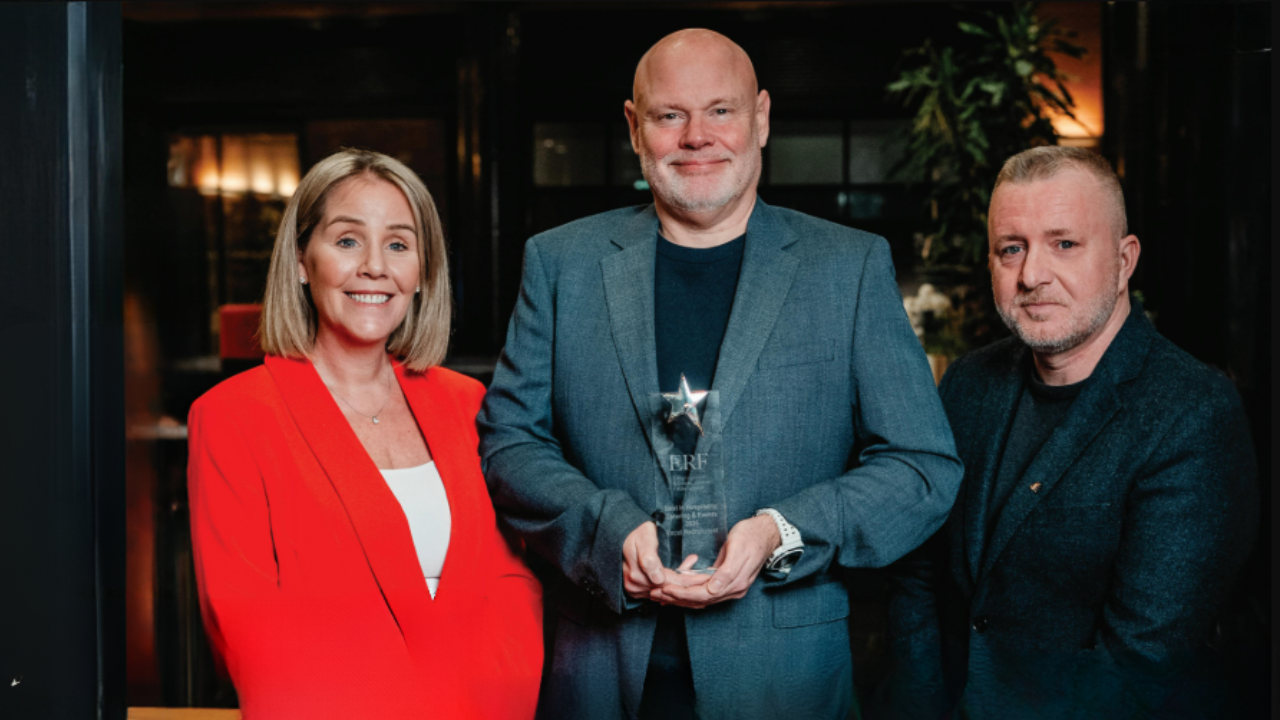

Excel Recruitment on How Partnership and People are Driving Hospitality Forward

The hospitality sector is rebuilding with confidence as partnership and people drive sector momentum.

Excel Recruitment has once again been recognised at the Employment and Recruitment Federation (ERF) Awards, receiving Best in Practice: Catering, Events & Hospitality title for the second consecutive year. This recognition reflects a consistent approach to supporting the hospitality sector, built on long-standing partnerships with clients and the ongoing commitment of temporary staff, candidates and employees across the business. In a people-driven industry, the award serves as a reminder that sustainable success is shaped through collaboration as much as performance. That sense of shared progress is echoed across the wider hospitality sector as Ireland enters 2026 with renewed confidence and momentum.

A sector moving forward with measured optimism

After several challenging years marked by rising costs and operational uncertainty, the mood across hospitality, particularly in Dublin, has shifted noticeably. While pressures remain, including wage inflation, PRSI increases and the introduction of pension auto-enrolment, the prevailing outlook is increasingly focused on long-term stability rather than short-term survival. Rather than a single breakout year, the sector’s recovery is taking the shape of steady, sustainable progress. New hotels are opening, restaurant concepts are launching and investors continue to back Dublin as a destination for both domestic and international visitors.

New openings signal long-term confidence 

This renewed confidence is perhaps most evident in the calibre of recent and upcoming hospitality openings across the capital. Hotels such as the Hoxton Dublin, Moxy East Point and The Leinster have added momentum to the accommodation market, while several thousand additional rooms are currently under construction or planning. On the food and beverage side, the arrival of The Ivy Asia stands out as a particularly strong signal of confidence. As a globally recognised, experience-led dining brand, its decision to open in Dublin reflects belief in the city’s premium dining market and the continued appetite for high-quality hospitality experiences. Other launches, including Bar Pez and a growing number of wine-led and concept-driven venues, further reinforce the sense that operators are investing with intention rather than caution. Collectively, these developments point to a market that is recalibrating – prioritising quality, experience and long-term sustainability.

Positive momentum on the ground

Shane McLave, Managing Director of Excel Recruitment, notes a clear shift in sentiment across the sector. “You can genuinely feel hospitality coming back to life. Every month, we’re seeing new hotels open their doors, new restaurant concepts launching and fresh investment across the sector. After a difficult period, there’s now a real sense of momentum and ambition returning.” This activity is being supported by stronger booking patterns, recovering tourism numbers and the gradual return of conferences, events and corporate travel – all of which play a vital role in supporting year-round demand.

Managing costs while building for growth

Cost pressures remain a reality for hospitality employers. Minimum wage increases, higher PRSI contributions and the rollout of the pension auto-enrolment are expected to increase labour costs for minimum-wage roles by approximately 6% in 2026. However, many operators are responding strategically. Rather than limiting growth, businesses are investing in smarter workforce planning, operational efficiencies and technology. Digital check-ins, mobile ordering and automated inventory systems are helping to reduce administrative burdens while preserving the personal service that defines Irish hospitality.

An evolving workforce landscape

The hospitality workforce itself is also changing. Recent labour market research shows that more than 80% of hospitality employees now view the sector as a viable long-term career – a significant improvement compared to previous years. Employers are responding by placing greater emphasis on predictable scheduling, work-life balance, training and progression pathways. Accommodation supports and structured upskilling initiatives are becoming increasingly common, particularly among new and expanding operators. Temporary and flexible staffing models continue to play a crucial role, especially for newly opened hotels and venues managing phased launches, seasonal peaks and event-driven demand. This flexibility allows businesses to scale efficiently while maintaining service standards.

Supporting the sector’s next phase

As a specialist recruitment partner, Excel Recruitment, continues to work closely with hotels, restaurants and events venues nationwide as they navigate this next phase of growth. From building full teams for new openings to supplying temporary chefs, front-of-house staff and event personnel, the focus remains on providing flexible staffing solutions that respond to real operational needs. This approach has become increasingly important as businesses adapt to a more dynamic and cost-conscious operating environment. In 2024, Excel also launched the Irish Bar Academy, a hands-on training initiative designed to equip both new entrants and experienced staff with practical, job-ready bar skills. The programme reflects a broader belief that long-term sustainability in hospitality depends on continued investment in people and professional development.

Rebuilding with confidence

While challenges remain, the direction of travel for Irish hospitality is increasingly positive. Guests are returning, investment is continuing and operators are hiring again. High-profile openings, combined with a renewed focus on people, partnerships and operational efficiency, provide tangible evidence of confidence in the sector’s future. As McLave concludes: “The industry is under pressure from rising costs, but we’re also seeing genuine recovery. Businesses that invest in their people, improve working conditions and embrace operational efficiencies are well positioned for long-term success.” With renewed energy, evolving workforce models and strong collaboration across the industry, Irish hospitality is not just recovering – it is rebuilding with confidence.

Excel Recruitment Calls for Rethink on Taxation of Tips as CCPC Issues New Guidance

As Ireland’s hospitality and service sectors continue to grapple with staffing shortages, Excel Recruitment has called on Government to reconsider the taxation of tips as part of a broader effort to make lower-paid roles more attractive to workers.

The comments come as the Competition and Consumer Protection Commission (CCPC) prepares to publish new research and guidance on tipping practices in Ireland.

According to Shane McLave, Managing Director of Excel Recruitment, tips play a crucial role in supplementing incomes for workers in hospitality, beauty, and other customer-facing service roles.

“For lower-paid workers, tips are hugely valuable. While recent legislation rightly ensures that tips left by customers go directly to staff, the Government missed an opportunity to go one step further by considering whether tips — or a portion of them — should be excluded from the tax net.”

The Payment of Wages (Amendment) (Tips and Gratuities) Act 2022, which came into force in December 2022, introduced new rules to ensure transparency around tipping and made it illegal for tips or service charges to form part of an employee’s basic pay. However, all tips received by staff remain fully taxable.

Excel Recruitment believes that this approach does little to address the ongoing recruitment challenges faced by hospitality and other service sectors.

“These are often low-paid roles, yet they are essential to our local and national economy,” McLave said. “Allowing workers to earn a certain amount of tips tax-free could make a real difference in encouraging people back into the sector.”

He pointed to existing tax-free voucher schemes, which allow employers to provide employees with up to €1,500 per year in non-taxable benefits, noting that such initiatives rarely benefit tipped workers.

“A more progressive approach would be to introduce a similar threshold for tips in service industries, allowing workers to earn up to a certain amount without incurring a tax bill. This would directly support incomes in sectors such as hospitality and beauty.”

McLave also noted that, from a consumer perspective, tax has already been paid on the goods or services being purchased.

“Once a product or service has been paid for, the appropriate tax has already been applied. Tips are a discretionary reward for service, not part of the original transaction.”

For further insight into labour market trends across hospitality, retail and service industries — and how policy changes could support both employers and employees — contact Excel Recruitment on 01 871 7676 or email info@excelrecruitment.com